
- KIMCHI BASICS
- GREEN PAPAYA KIMCHI
- CUCUMBER KIMCHI
- TUNA KIMCHI SALAD
- KIMCHI SHRIMP
- OKINAWA KIMCHI
- EDAMAME BROCCOLI KIMCHI
- TROPICAL FRUIT KIMCHI
- KIMCHILI VERDE
The world now embraces kimchi in all its healthy deliciousness. As a self-taught cooking instructor I remember going into Korean restaurant 30 years ago and sitting at the bar [so as not to order a whole meal for just a taste] to cautiously experience my first taste of kimchi. It was a spicy jolt that was beyond my limits. But I knew I could tame it with my own recipes and thus began my evolution in kimchi making.
Kimchi Basics
On the Road to Kimchi
Let’s deconstruct kimchi and fashion an everyday recipe as a mainstay in your kitchen. I will show you how to make a sturdy ferment and a key ingredient in a variety of quick dishes.
Traditional kimchi is made by adding chili paste directly onto each whole Chinese cabbage leaf that has been heavily salted in an all-day affair. Instead, I developed this method that yields very tasty results in one tenth the time.
Think of this recipe as making a salad ready to eat in four days
MAKES 2 QUARTS [Easily Halve]
INGREDIENTS: Find Gochugaru at Asian markets
- Napa cabbage – 1 ½ LBS, 1-inch squares
- daikon radish – 1/2 LB, thin matchsticks
- scallions – 3 large, thin slant slices
- garlic – 2 TBS, minced
- ginger – 2 TBS, peeled, minced
- Korean chili flakes – 3 TBS [gochugaru]
- apple or pear, 1 cup, grated
- water – 4 cups, [filtered]
- sea salt – 2 TBS,
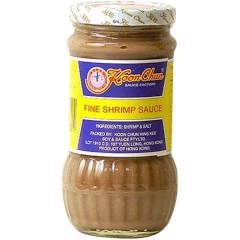
- fish sauce – 1 TBS [optional; or 1 tsp shrimp paste— for a real umami punch]
Directions below are for jar fermenting kits, like the Perfect Pickler. Review your own fermentor directions to complete. Ultimately you will pack your fermenter until almost full, then add a brine before completing the sealing so no air is in contact with the ingredients.
- Gather a large bowl and add chopped produce as you go
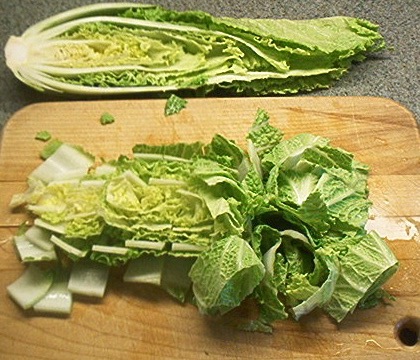
- Halve cabbage length-wise, remove root section, cut into one inch squares (see below)
- Peel and julienne daikon
- Trim and cut scallions into thin, slanted slices
- Add grated fruit, garlic, ginger, chili flakes, toss well to combine.
- Pack a 2 quart jar with the ingredients, packing firmly along the way up to 2-inches from the jar lip
- Make brine by dissolving salt in water
- Pour brine over vegetables; gently wiggle jar to release air bubbles. Continue filling until just below the lip of the jar
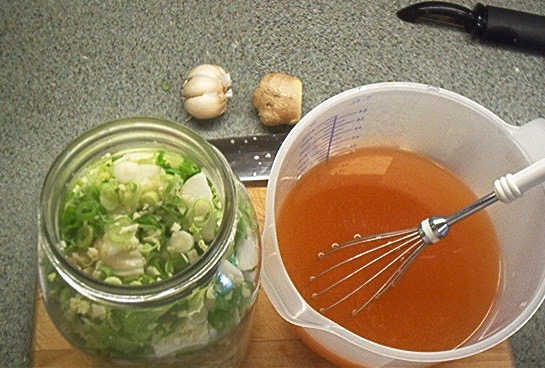 Seal the jar according to the instructions in your kit
- Place in cool location and ferment for 4 days
When fermentation is complete, adjust for more spiciness if desired by adding chili flakes
PLANNED-OVER DISH

A classic 15-minute comfort dish – Kimchi Fried Rice with Fried Egg and Sesame Seeds
Kimchi Bokkeumbap (Fried Rice and Kimchi) – Featured above, this is the bomb! Stir fry some planned-over rice in oil in a skillet. Add in minced kimchi to taste. Fry an egg per diner and serve on top with a sprinkle of toasted sesame seeds.
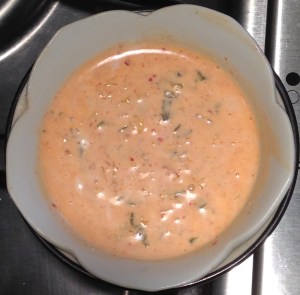
Kimchi Mayo
Purée kimchi with mayonnaise for an instant creamy-spicy dip or spread
– Recipe adapted by B. Hettig
GREEN PAPAYA KIMCHI
Papayas Makes a Stunning Ferment
Around the globe many cultures figured a way to eat fruit before it turns sweet. You may think this is counterintuitive, but when tropical fruits, like papaya and mango turn sweet on the branch, Nature comes to feast on the fruits of your labor.
Papaya Kimchi is like making lemonade out of lemons; green papayas taste like zucchini, and are perfect as a fermented kimchi.

Green papaya is labeled as such in Asian markets. For some of us living in the subtropics, they grow in our yards and are generously shared. The pulp is white and the seeds are white in this state. The pulp is firm and takes to grating easily.
TWO STYLES OF FERMENTATION: SALTWATER BATH vs. DRY SALT BRINE
Many types of lacto-fermented “pickles” are made by steeping the cut up veggies in a saltwater bath [2 cups filtered water with 1 TBS sea salt>3.5%]. There is also the option of skipping the water and adding the salt directly to a grated form of produce. For every 2-1/4 LBS of shredded veggies, add 1 TBS sea salt, then begin mixing and squeezing with your hands to develop the liquid. This style is used to make sauerkraut and other grated mixtures. So you can do either method with this recipe.
INGREDIENTS: Make 1 Quart using a saltwater brine. [See below to make using dry brine]
NOTE: Traditional variations include Asian pear, or other firm fruit that is not overly ripe
- filtered water – 2 cups
- sea salt – 1 TBS, [or use 1 tsp salt and 1 TBS fish sauce]
- green papaya – 1 medium, about 3 cups, small dice
- onion – 1 cup, thin slices [or scallions]
- garlic – 1 TBS, minced
- Korean chili flakes – 2 TBS [gochugaru*]
- sugar – 1 tsp – or 1/2 cup of grated fruit [apple, pear, peach]
*Gochugaru is the traditional chili for kimchi. It has a milder spice profile than cayenne. You can substitute, but using high-heat chilies are not the intent for this kimchi, so use less
INSTRUCTIONS: Lacto-fermentation is an easy entry method. I developed the Perfect Pickler Fermentation Kit that uses an airlock-canning jar system. There are a number of ways to lacto-ferment safely
- Dissolve the salt in the water to make a brine
- Combine all the remaining ingredients in a bowl then pack into a clean one quart mason jar
- Pour in the brine up to just below the jar lip. Seal the jar for lacto-fermenting using an airlock or other style
- Place on a saucer and leave in a cool area, away from direct sunlight for 4 days to complete the fermentation
- Taste the kimchi and adjust if needed
- Refrigerate and enjoy
ALTERNATE DRY BRINING METHOD: You will need about 2 1/4 pounds total weight of ingredients. For a “kraut” style: omit the water and add the salt directly to the shredded veggies. Squeeze and press the mixture until the brine forms then proceed to pack the jar and complete according to your fermentor directions to seal
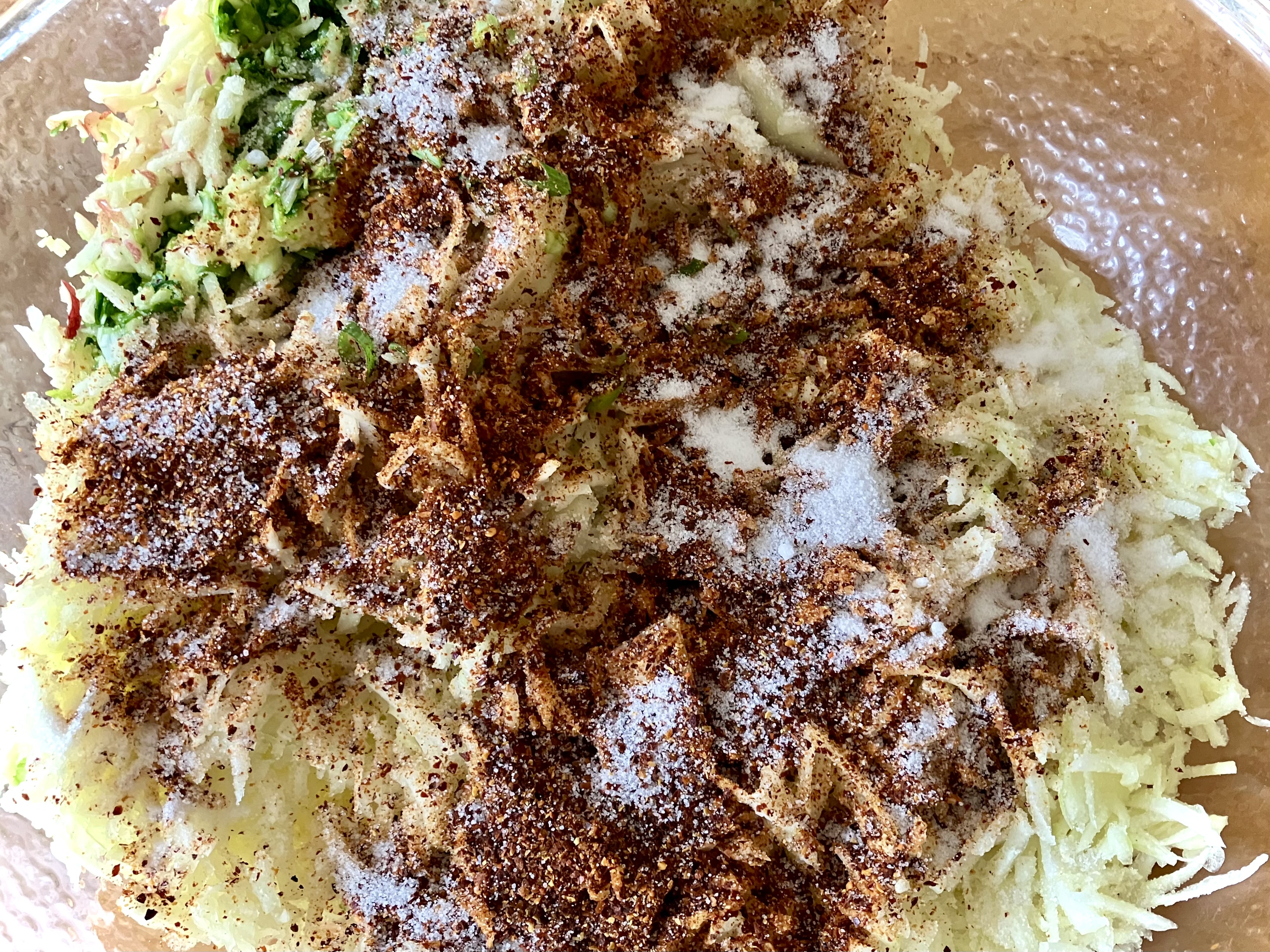
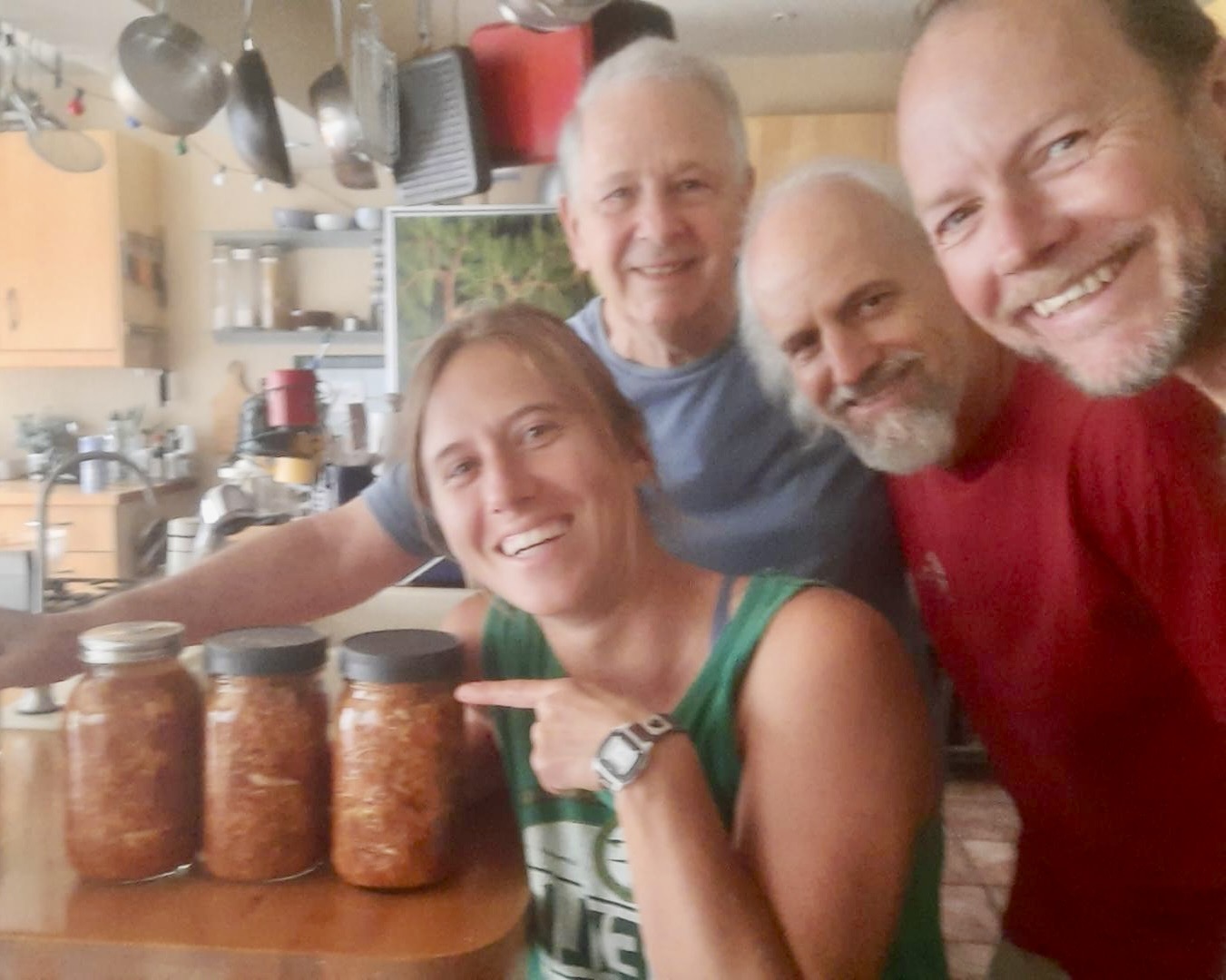
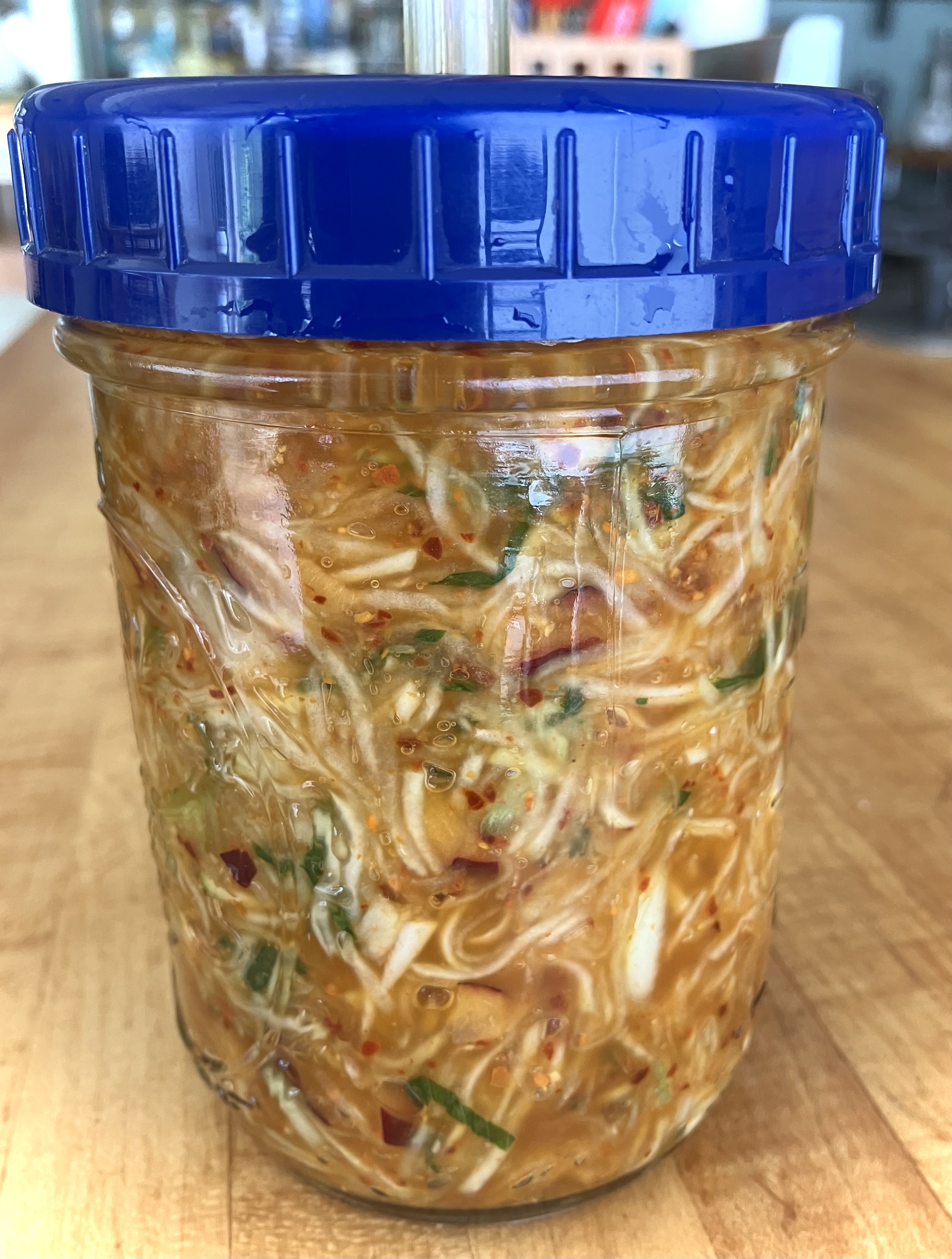
Kimchi Workshop at the Renewal Kitchen
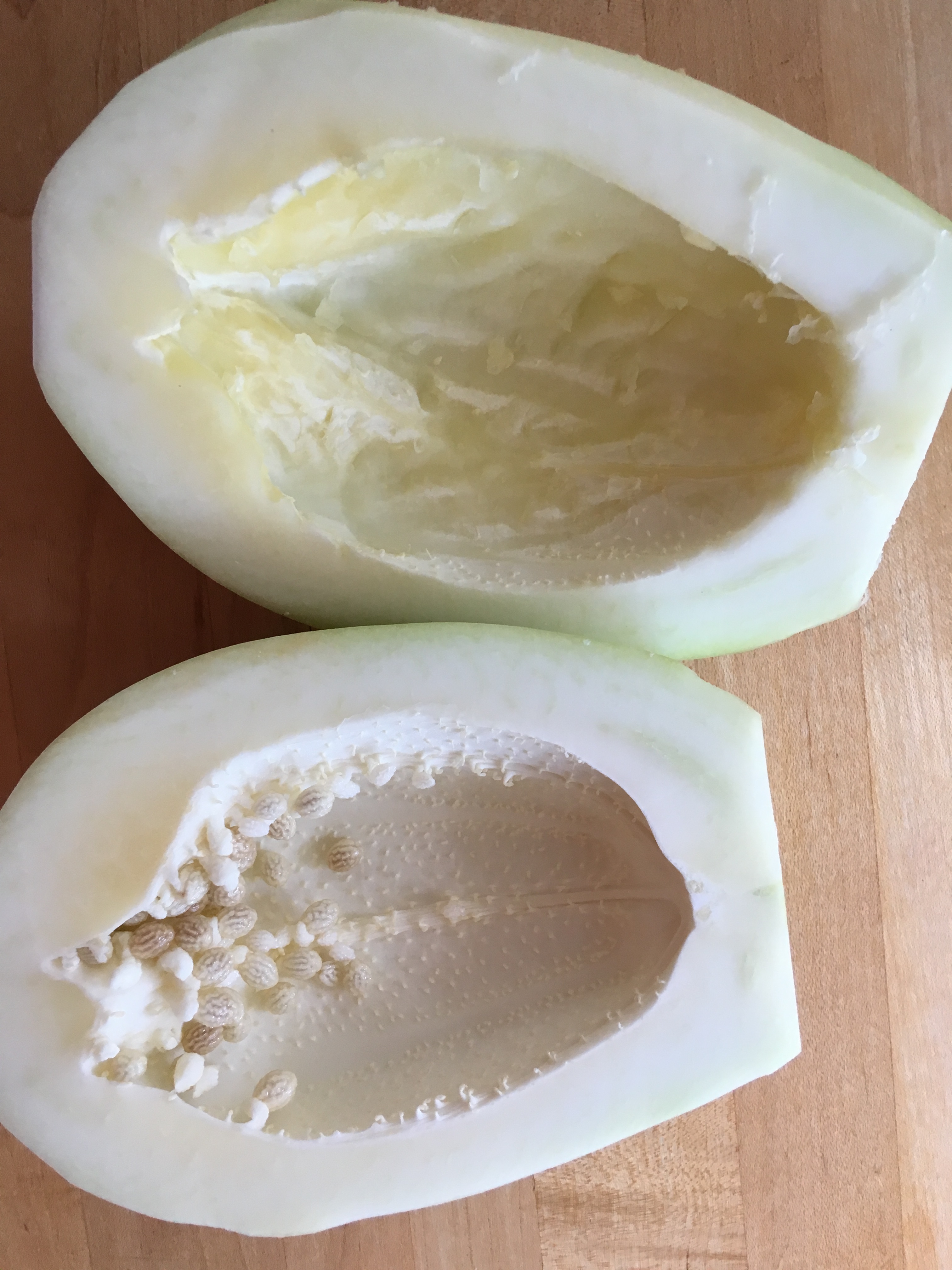
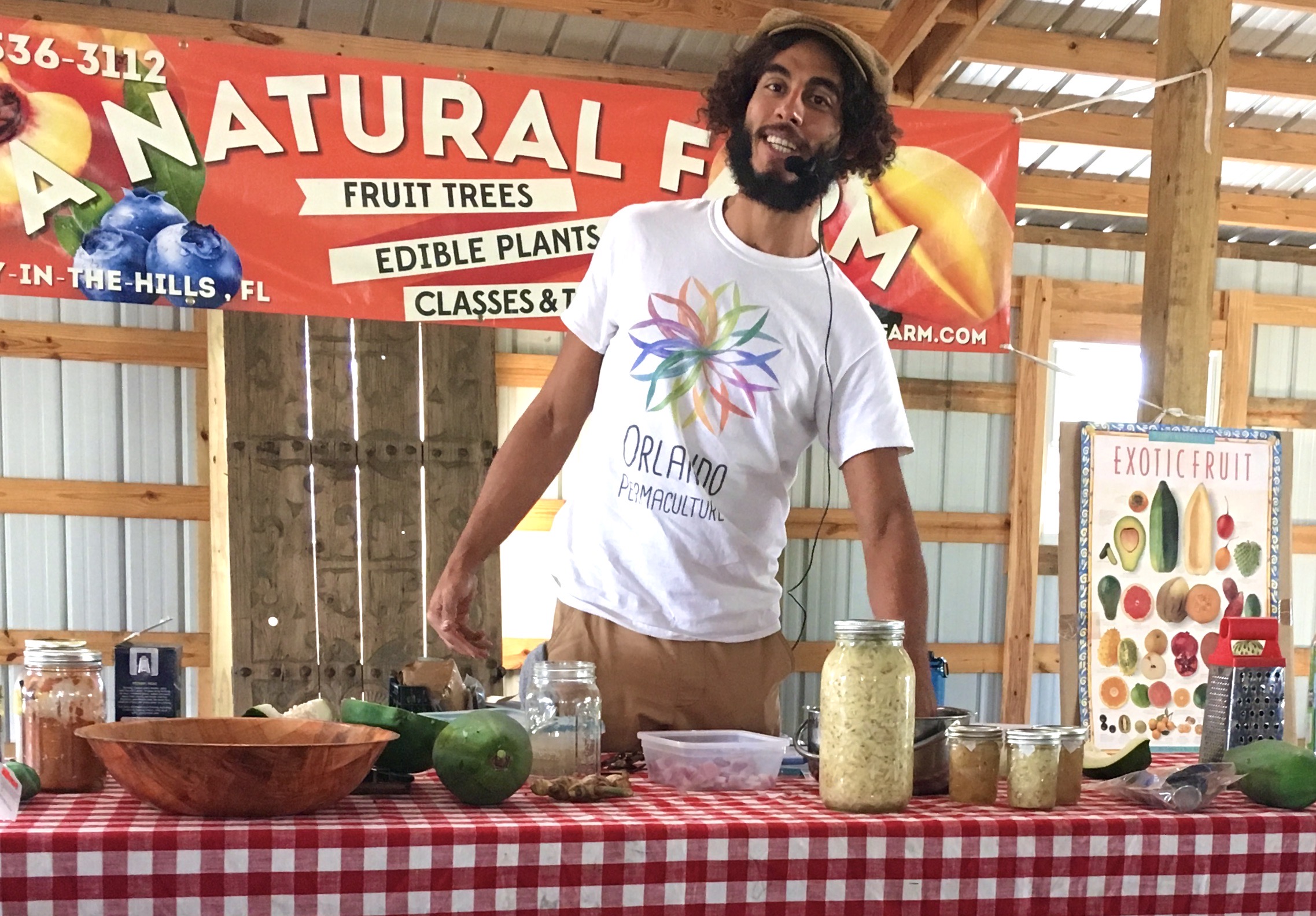
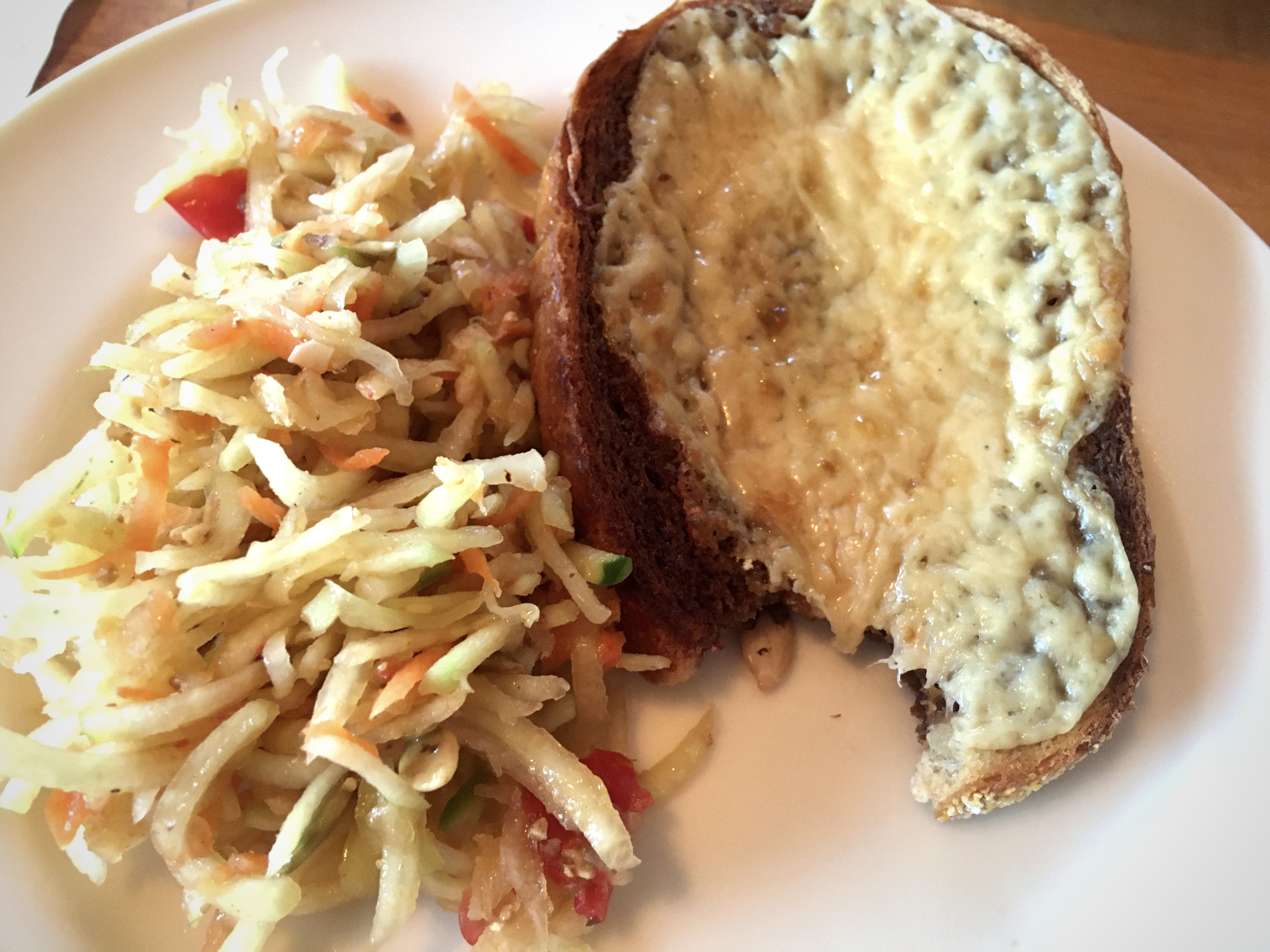
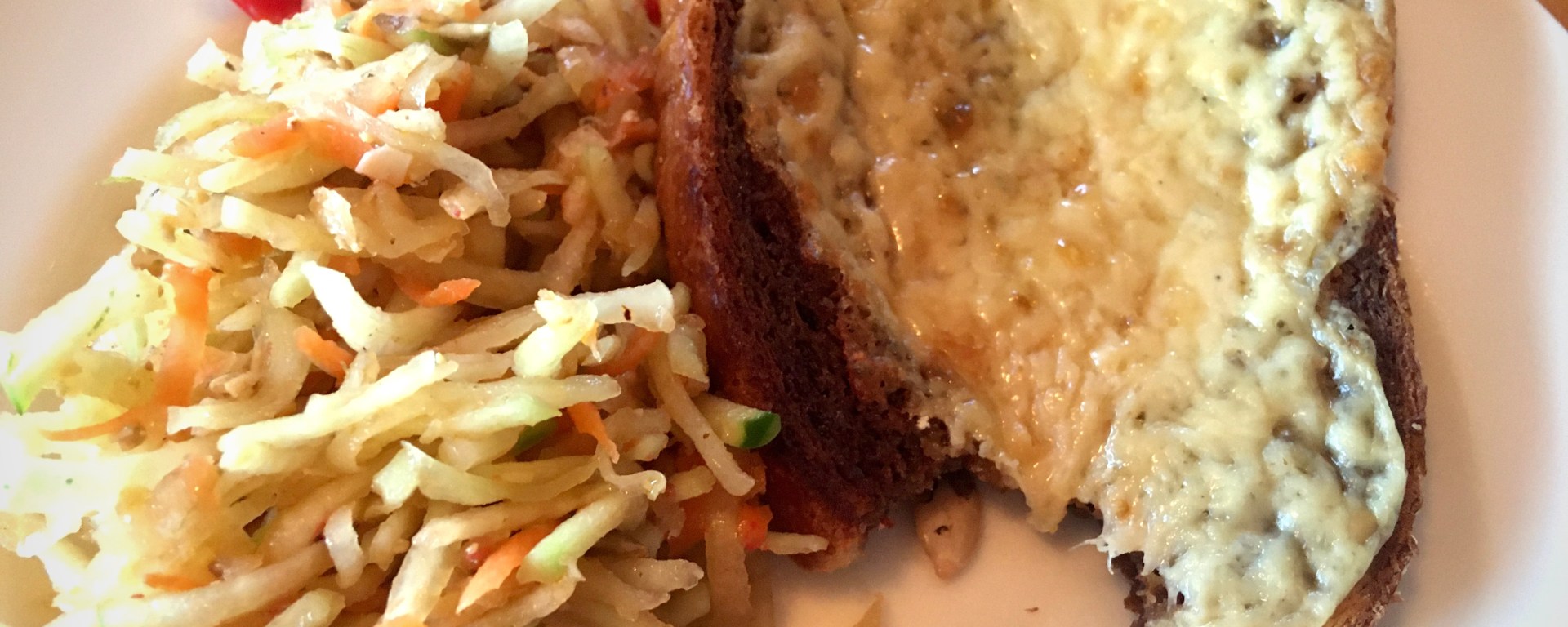
(L): Green Papaya (Upper R): Jay Starr Demoing Kimchi Making (Lower R): Papaya Kimchi with Welsh Rarebit Toast
Recipe adapted, original by Mark Fowler
Cucumber Kimchi
Kimchi contains any variety of produce, in Korea there are four different seasons of kimchi. We know the winter Napa cabbage version. This is a summer-fall favorite
I love a good pickle—not only dills—this recipe will not disappoint. I learned a valuable technique—how to make cucumbers stay crisp as a pickle! Soak them in a temporary strong brine [instruction below].
Hydroponic cucumbers are showing up in markets year round . They’re uniform, firm, and pickle well. They are my go-to for fermenting.
INGREDIENTS: MAKES 2 QUARTS
Find small, straight cucumbers, that are shiny and firm
- cucumbers – 1 1/2 LBS, hydroponic, gherkin, or kirby
- garlic – 2 TBS, minced
- ginger – 2 TBS, minced
- scallions – 6 medium, thin slices
- leeks – 2 cups, 1/2-inch long, half rounds
- Korean chile flakes – 3 TBS [gochugaru]
- water – filtered, 4 cups
- sea salt – 2 TBS
- sugar – 1 tsp [optional]
- Fish sauce – 1 TBS [optional], or oyster sauce, soy sauce

Note: Trim Both Ends of the Cucumber
INSTRUCTIONS:
- Make a temporary strong brine by dissolving 1/3 cup of ordinary table salt in four cups of water
- Meanwhile, with a sharp knife cleanly slice off the tips from both ends of cucumbers
- Soak cucumbers for 30 minutes, then rinse—[Store this strong brine in a sealed jar for future strong brining only] DON’T USE THIS TO FERMENT
- Combine filtered water and sea salt and dissolve—add sugar and fish sauce, if using
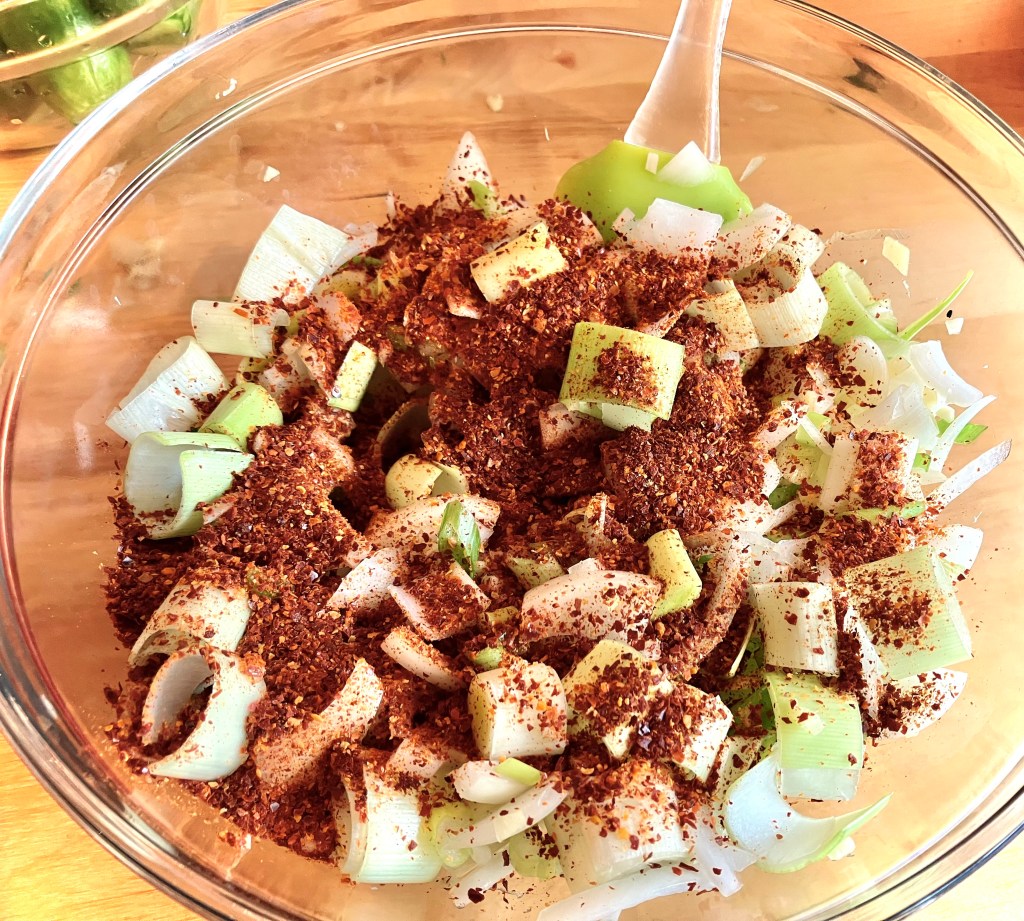
- In a large bowl, toss together the garlic, ginger, scallions, leeks, and Korean chile flakes
- Add 1/2 of the garlic mixture to a clean fermenter; add in enough cubes to fill bottom of jar upright in one row; add in remaining garlic mixture
- Load the last of the cukes, only cutting those that need to fill the fermenter—don’t smash them in, you may not use all the cucumbers; but they are ready for a fresh salad!
- Pour in enough of the quart of brine+sugar+fish sauce until nearly full
- Seal the fermenter according to maker’s instructions
Ferment at room temperature [up to 75º F] for 4 days, then refrigerate
TUNA KIMCHI SALAD
Fast Fix For Funky Fish
I’ve made tuna fish salad the same, safe way since I was weaned on it. Here’s a funky-fermented twist with kimchi.
Tune up your sandwich fixin’ or toss this with some cooked pasta and serve on a bed of lettuce for a lunch strategy
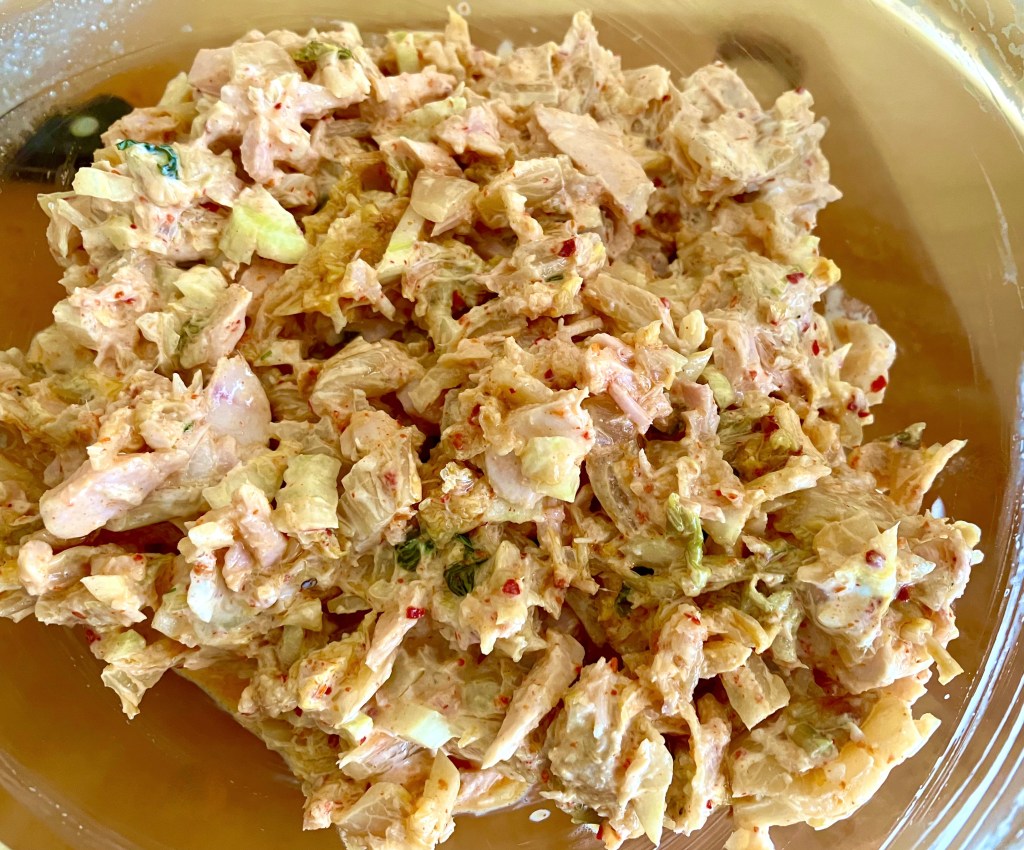
INGREDIENTS:
- kimchi – 1 cup
- tuna – 6 oz can, drained
- ginger – 1 inch chunk, grated or minced
- celery – 3 ribs, minced [or fennel]
- acid – 1 TBS rice vinegar, lime, or lemon juice
- soy sauce – 1/2 TBS, or fish sauce
- toasted sesame oil – 1 1/2 tsp
- mayonnaise – 1 tsp [optional]
- toasted sesame seeds – for garnish [ or Japanese furikake*]

INSTRUCTIONS:
- Pour kimchi into a sieve over a bowl to capture the brine
- Chop the kimchi, and in a separate bowl combine with the chopped ginger, and celery
- To the kimchi brine add the vinegar or citrus juice, soy sauce, toasted sesame oil, and mayonnaise [if using]
- Taste the dressing for balance and adjust if needed [I like to use fish sauce here, and a touch more chili pepper flakes if it needs a spike of heat]
- Combine the kimchi and dressing and toss
- Serve with toasted sesame seeds or furikake*
*Furikake is a Japanese condiment of toasted nori and sesame seeds. It adds another punch of umami and nutrients. I find at Asian markets or Trader Joe’s
Recipe adapted from NYTimes
Kimchi Shrimp
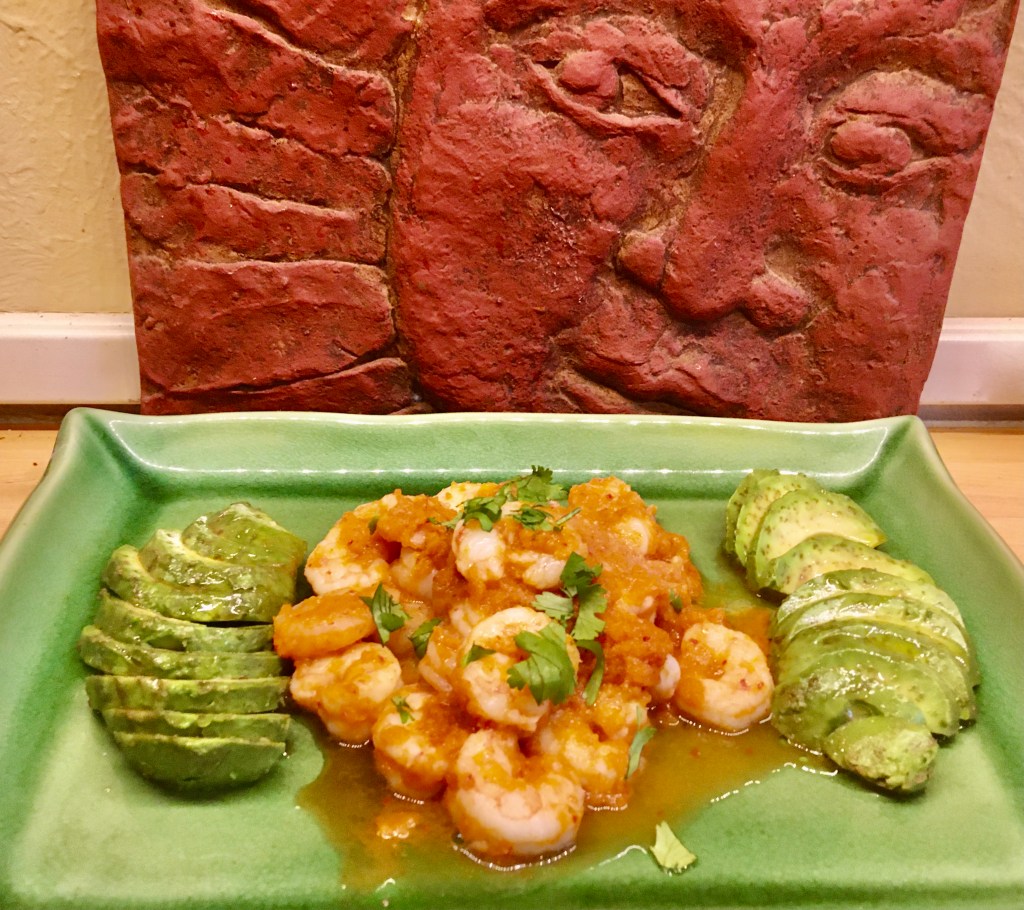
Gather Butter, Shrimp, and Kimchi For Asian Shrimp Scampi
I’m always on the prowl for dishes that are 4-star with few ingredients, easy to remember, and get a direct pass into dinner rotation. Yep, it’s all here!
This succulent dish is perfect for both a protein dish or even better—a wowzer appetizer!
INGREDIENTS: Serves 3-4 as Side Protein Dish or 4-6 as an Appetizer
Consider adding cold noodles, tossed in equal parts olive oil and ponzu as a bed for the shrimp
- shrimp – 1 LB., peeled and deveined, [or scallops, or chunks of white fish]
- garlic – 1 tsp., minced
- ginger – 2 tsp., minced
- kimchi – 3/4 cup, coarse purée
- butter – 2 TBS.
- lime juice – for garnish
- cilantro – for garnish
INSTRUCTIONS:
- Prepare the ingredients and have ready at the stove–this is a very quick dish
- Heat up a skillet and melt the butter, add garlic, and ginger. Sauté for 30 seconds
- Add in the shrimp and cook until just pink on both sides; 90 seconds or so
- Add in the kimchi and toss until warmed through
- Serve with a squeeze of lime juice and chopped cilantro
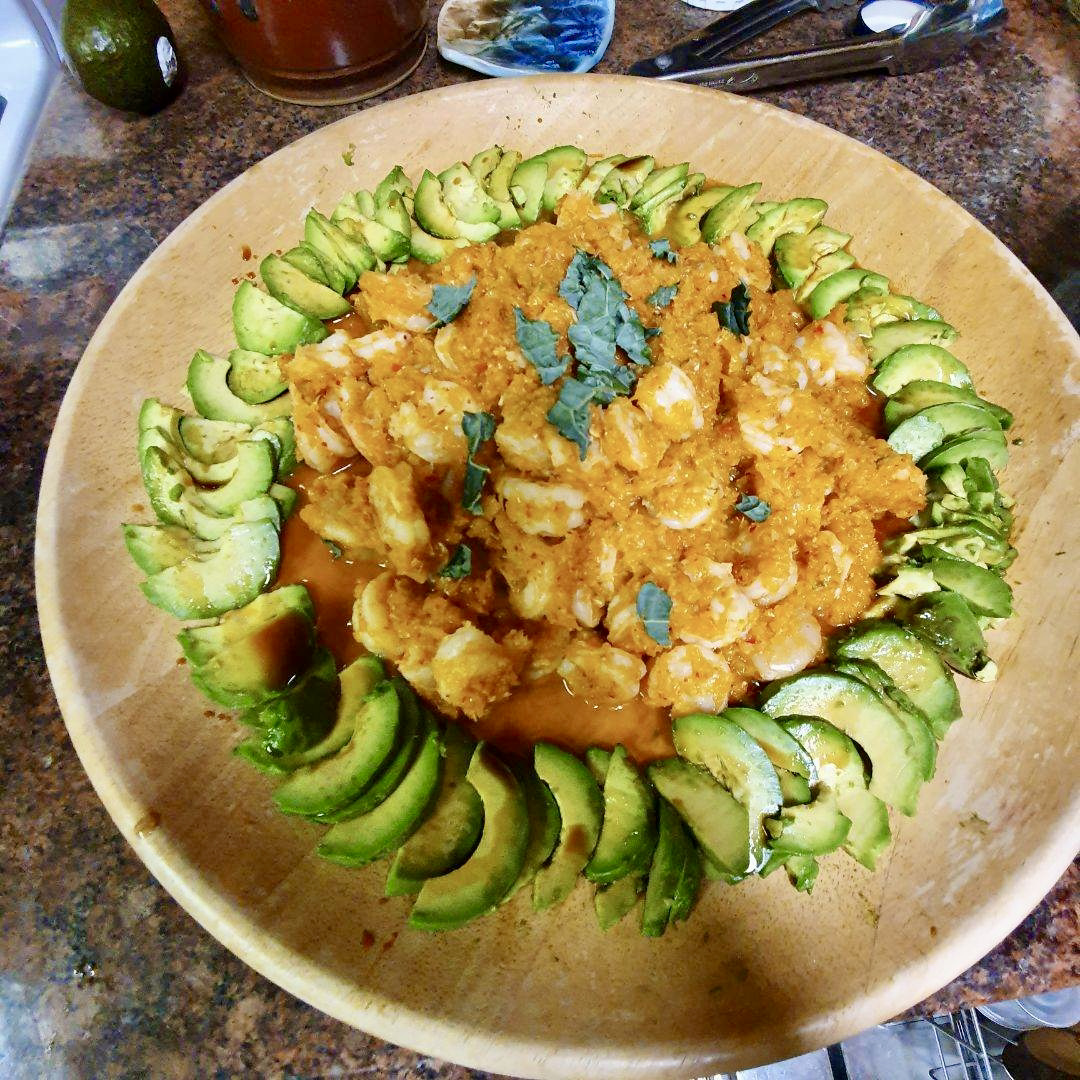
SIDE DISH COMPANION: A PERFECT MATE: AVOCADO!
- avocado – 2, halved, 1/4″ slices
- olive oil – 2 TBS.
- ponzu sauce* – 2 TBS.
- toasted sesame seeds – 1 tsp. [my favorite go-to seasoning. Here’s a quick recipe]
- Scoop out the avocado halves and slice
- Fan them artfully on a serving platter
- Lightly salt and pepper
- Combine 2 TBS. each olive oil and ponzu sauce* and spoon over avocado
- Sprinkle lightly with toasted sesame seeds
*Ponzu sauce is a flavored soy sauce found in most supermarkets. It is loaded with umami flavor and I promise you it will be used it far beyond this dish.
This olive oil-ponzu sauce is also delicious for pasta, salad dressing, or for veggie sautés: just combine equal parts olive oil and ponzu; that’s it!
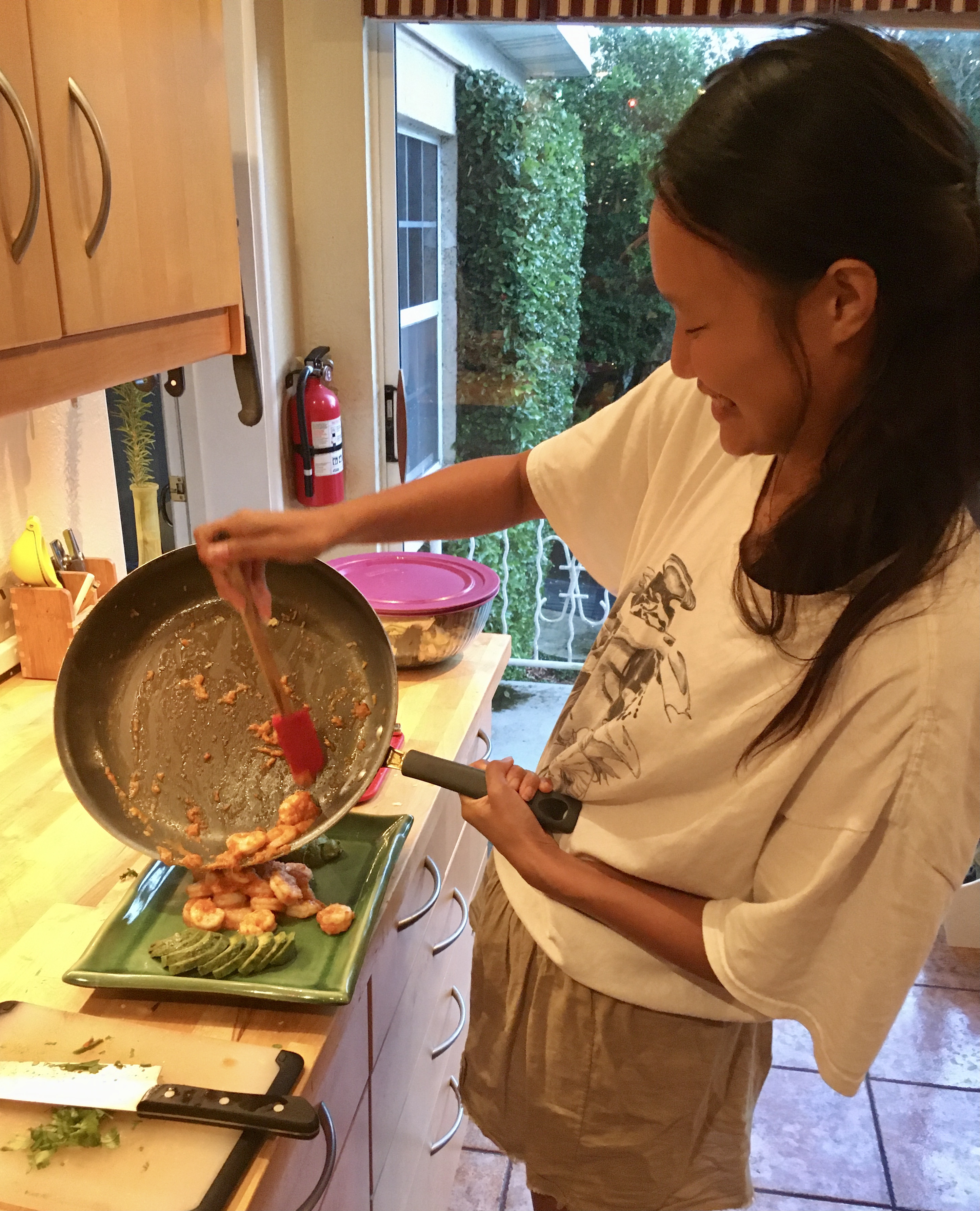
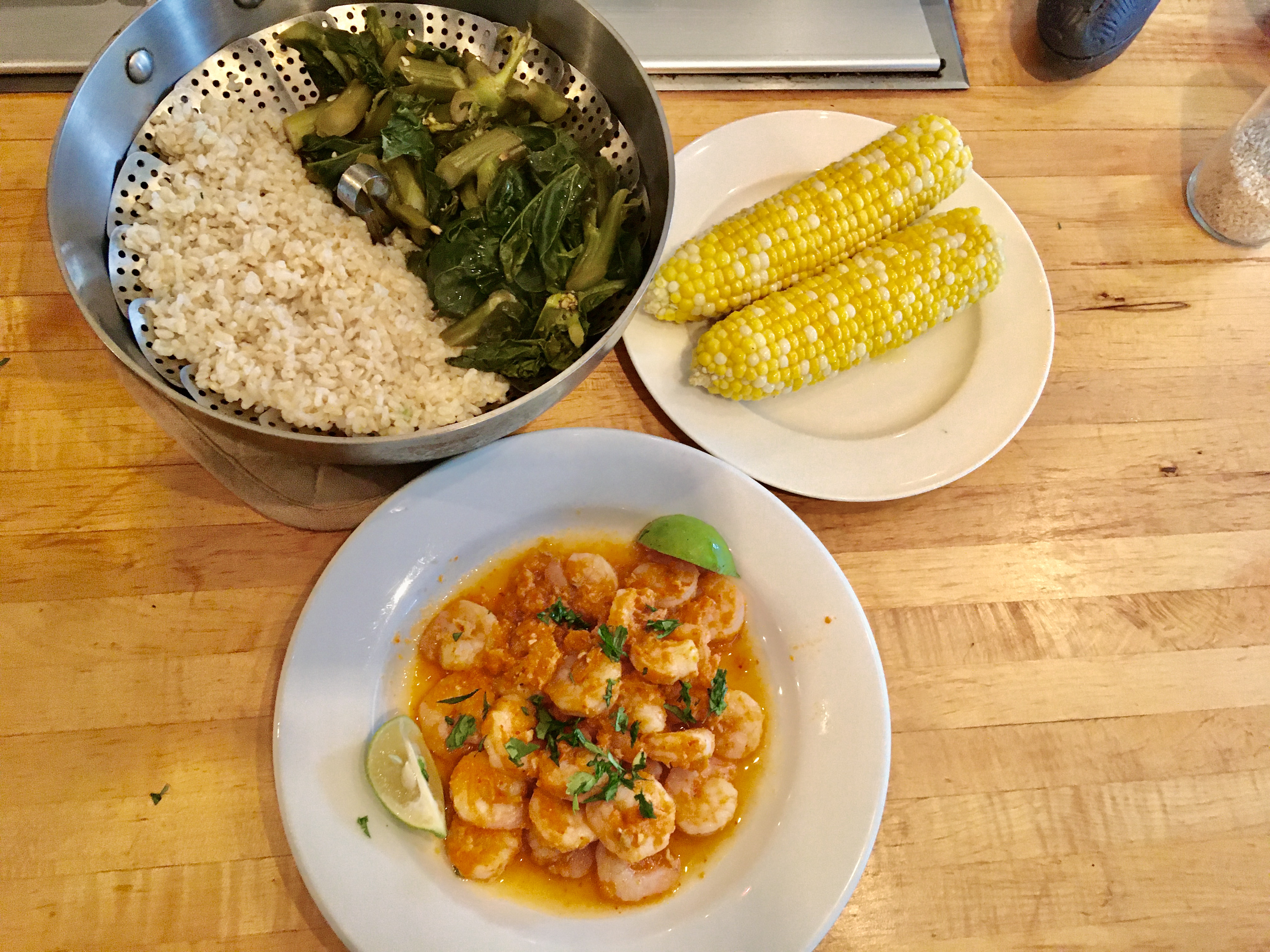
[L] Yuan plating our special treat [R]: Kimchi Shrimp with steamed rice and greens, corn-on-the-cob
Top shelf party platter [BELOW]: kimchi shrimp served with avocado spritzed with ponzu, olive oil, and toasted sesame seeds
OKINAWA KIMCHI
Okinawans are renowned the world over for good health and longevity. Their native diet also seems to confer very low incidences of breast and prostate cancer. This original recipe includes ingredients found in their diet and is based on research from Daphne Miller, M.D., in her seminal work, The Jungle Effect. This recipe is similar to Korean pickled cabbage — kimchi, but without chili spice.
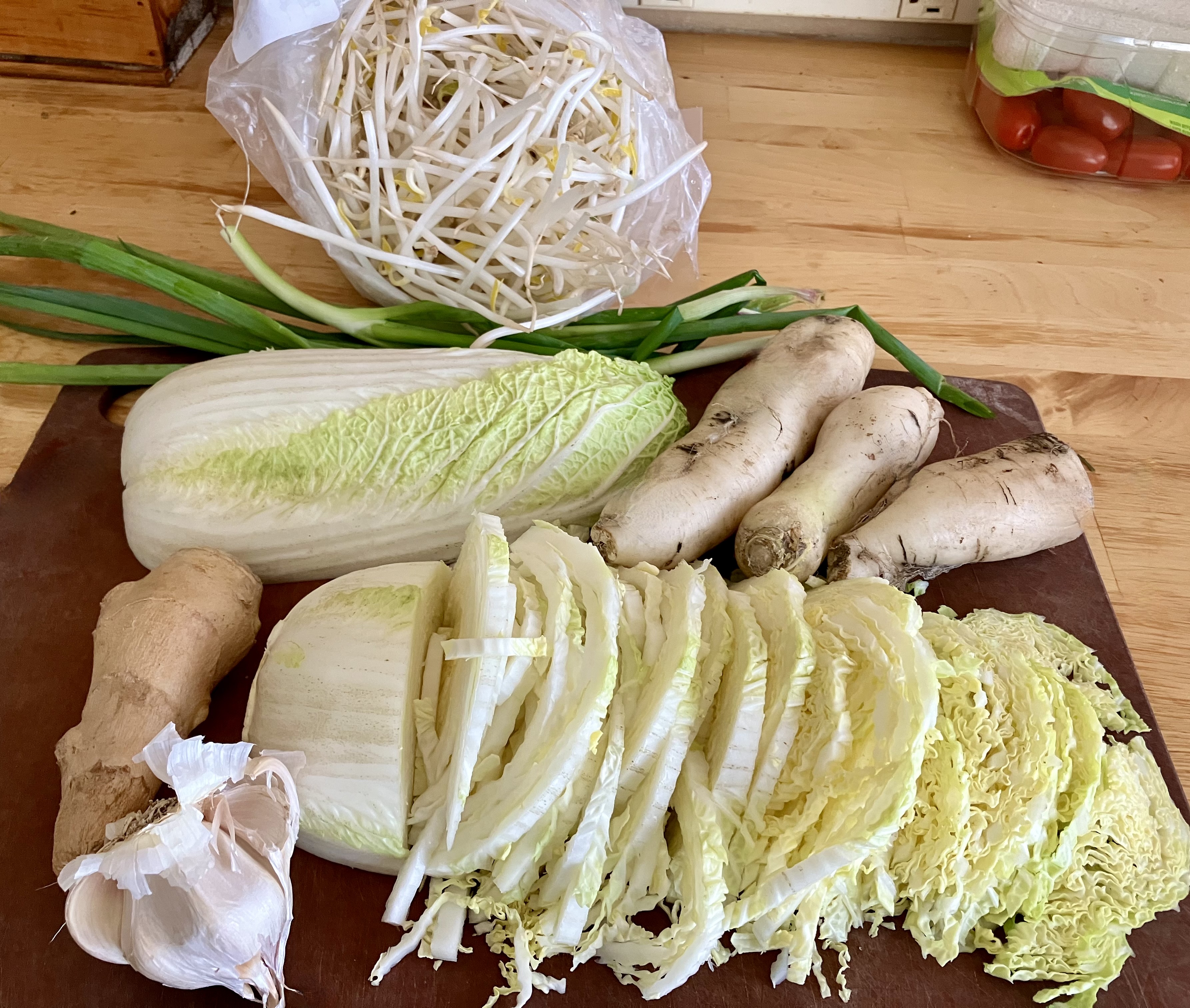
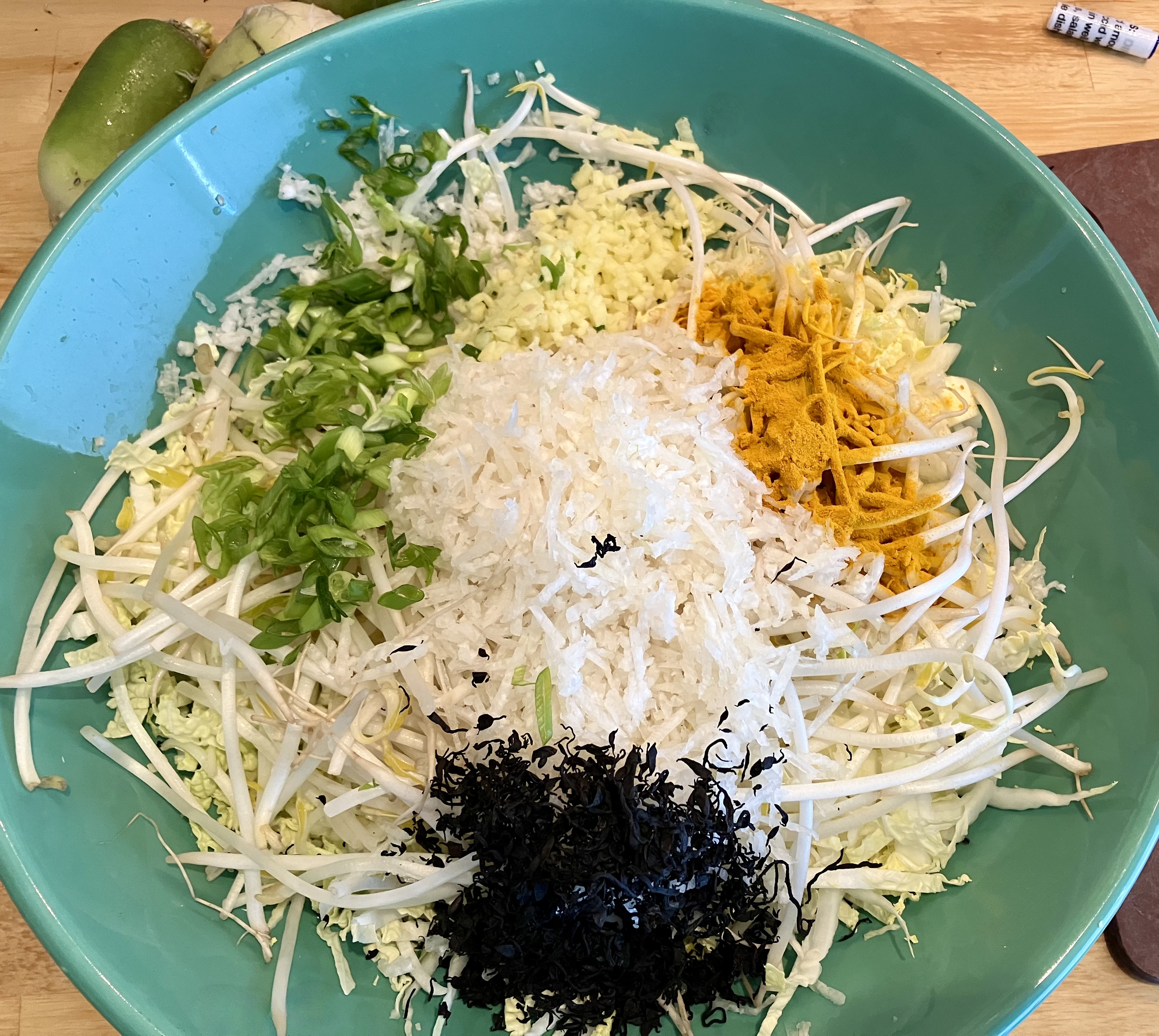
Bean sprouts are live plant matter to add to the bounty of this ferment
We are introducing sea greens to you. Hijiki is non-slippery and mild tasting. Sea greens are a key staple in the Okinawan diet. If you like the wrappers (nori) in sushi, you will also like these sea greens.
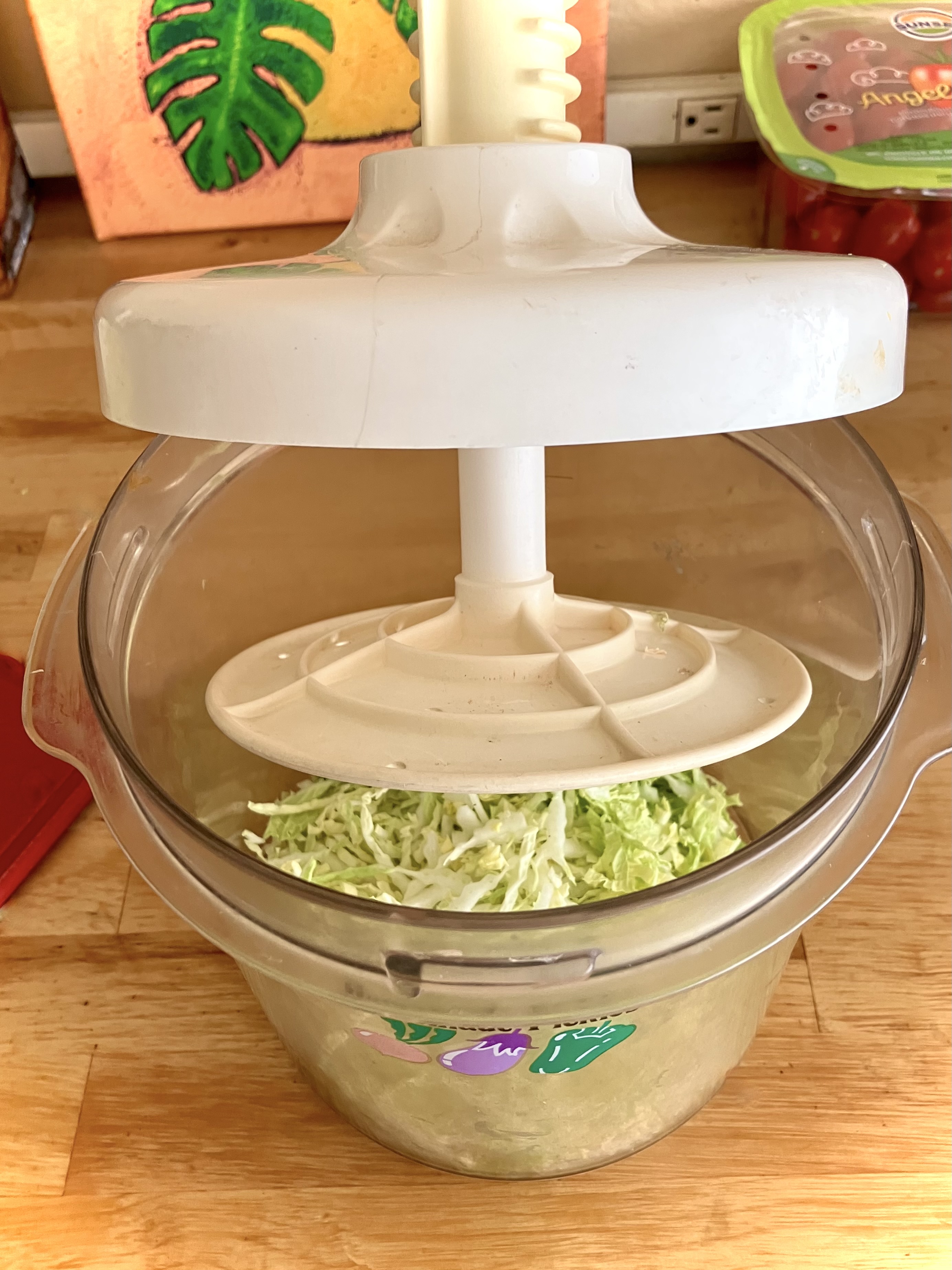
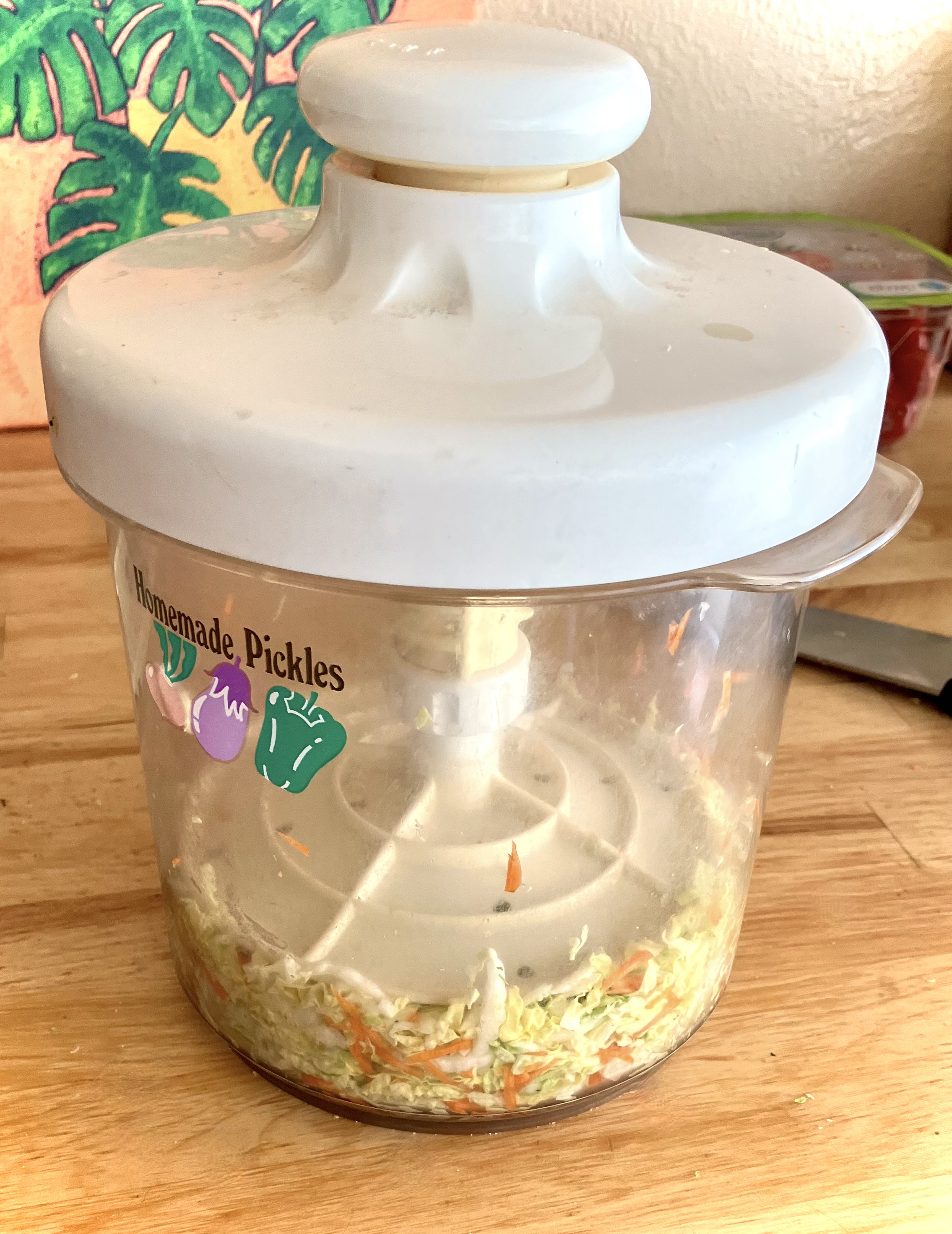
Introducing a salad/pickle press. Above is my 30 year old press that speeds up the brine formation without water. The press along with the salt rapidly forces liquid from the veggies. Otherwise, you can perform the same technique: squeeze and toss the mixture for a few minutes to create the brine. This may take 5-10 minutes. Resource for a salad press
INGREDIENTS: Makes 2 Qts – Easily halved. Figure about 2 pounds total veggies and vary amounts of each veggie as you please
If you like, add Korean chili flakes [gochugaru] 1-3 TBS. Locate at Asian stores.
- Napa cabbage – 1 LB, 8 cups, thinly sliced
- daikon radish – 3 cups
- mung bean sprouts – 3 cups, about 1/2 pound
- ginger root – 1 TBS
- garlic – 1 TBS
- scallions – 4, thinly sliced on bias
- sea greens – 1/4 cup, hijiki, arame, or wakame
- turmeric powder – 1 TBS
- pepper, fresh ground – 1 tsp
- sea salt – 2 TBS
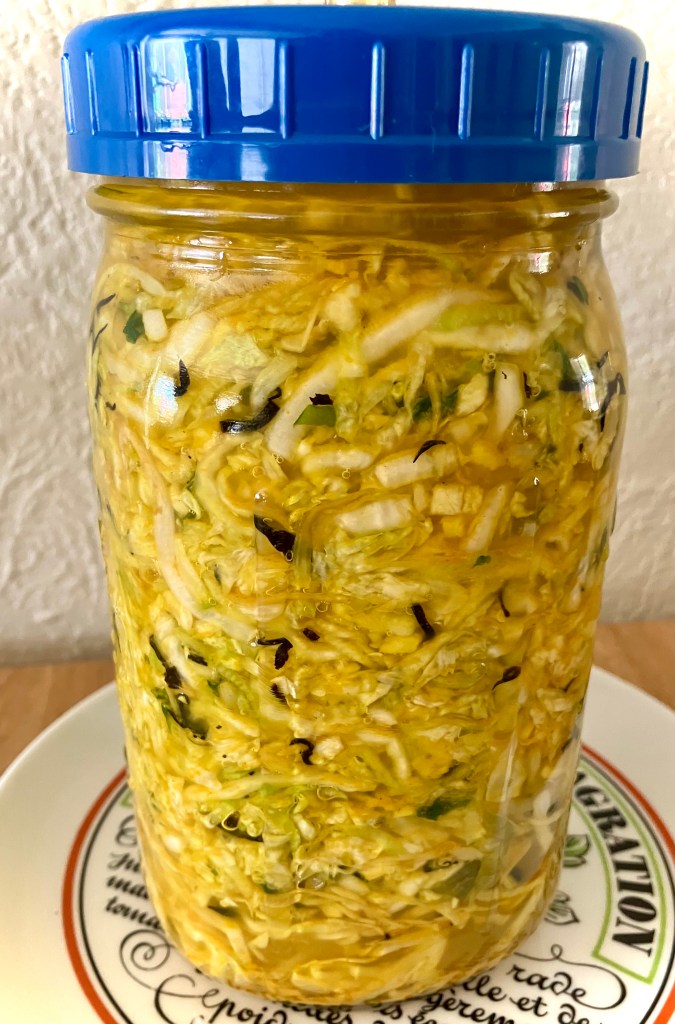
Turmeric adds color and anti-inflammation benefits
INSTRUCTIONS:
- Toss all the ingredients in a wide bowl and massage [use gloves because of turmeric] until liquid begins to seep from squeezing a handful; about 5 minutes
- Pack into a clean 2 quart mason jar, [this recipe was developed using the Perfect Pickler©] or other lacto-fermentation devise and seal
- There should be a brine created that completely covers the mixture before sealing the jar
- Refrigerate after four days of fermenting at room temperature
TROPICAL FRUIT KIMCHI Recipe adapted, original by Nancy Ramsay, Wild Fermentation
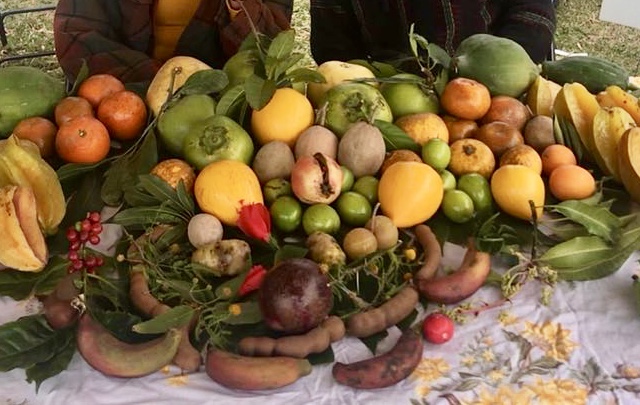
WOW! Who’da thunk!!? This is a lively, culture-active spicy fruit cocktail that fizzes on your tongue. Wonderful as a summer salad, and a party starter.
INGREDIENTS: Include a variety of: pineapple, mango, grapes, Asian pear, kiwi, plums, star fruit
- fruit – 2 1/2 cups, cut into bite sized pieces
- cashews – raw, 1 cup, coarsely chopped
- scallions – 1 cup, thinly sliced
- garlic – 2 TBS, minced
- ginger root – 6 TBS, grated
- jalapeno – 1 large, chopped, [seeds removed is optional]
- lemon juice – 1/4 cup, [2 lemons]
- lemon zest – 2 TBS, finely grated
- gochugaru chile flakes – 2 TBS [or to taste]
- cilantro – 1 bunch – chopped
- kefir lime leaves – 2 TBS, minced [optional]
- brine – 2 TBS sea salt dissolved in 4 cups filtered water
INSTRUCTIONS:
- In a large mixing bowl combine all the ingredients except the brine
- Add the ingredients to a 2 quart fermenting jar, packing as you go
- Mix the brine and add to the jar until 1 inch from the jar lip
- Seal the jar according to manufacturers instructions
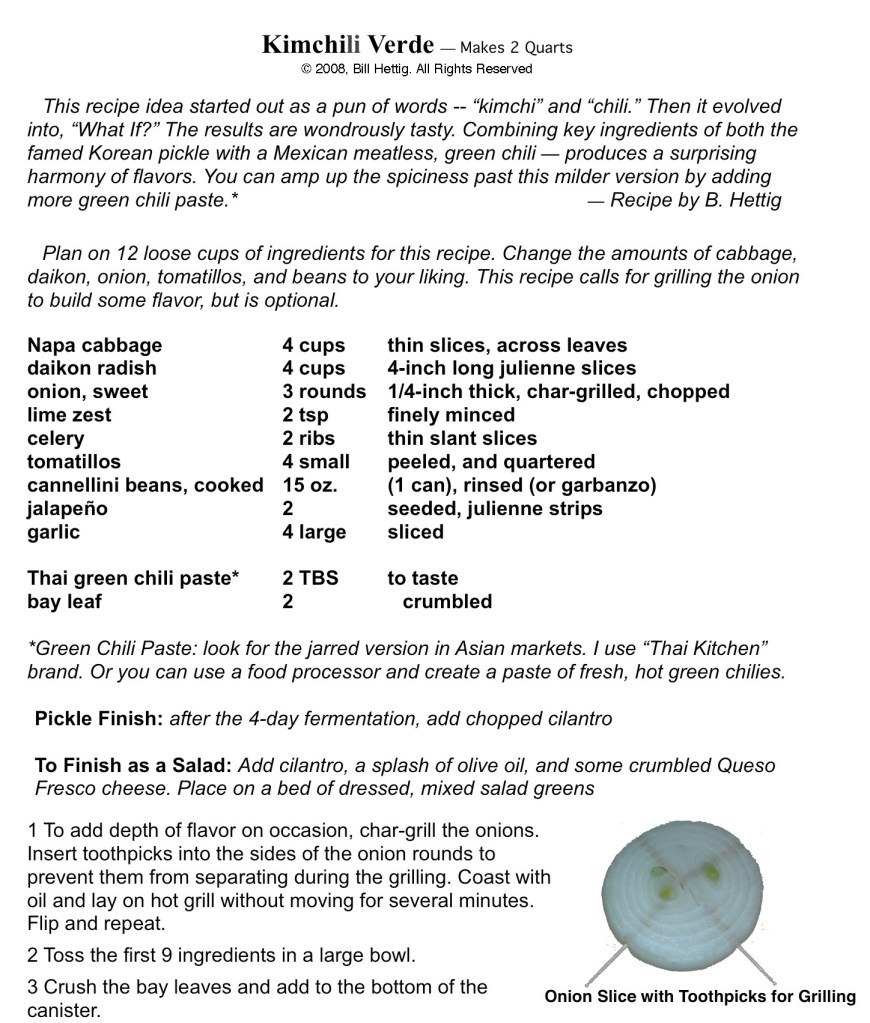
4 Fill the canister almost to the top and complete sealing the fermentor according to your manufacturer’s instruction.
© 2021-2024, Bill Hettig.
 COOK SHARE