
In the World of Fermentation, Vinegar is the Simplest
David Attenborough the British naturalist, once ventured up in a helium balloon to the limits of our atmosphere in search of the last earthly specimen at the threshold of outer space. Five miles above the earth in an atmosphere almost void of oxygen, he found only yeasts and bacteria—the very seeds for making spirits and vinegar and “life.”
I love to hear, “Darn, the wine went bad.” That’s my lead in, “No, the wine went good.”
All vinegars are actually double ferments: they begin as wine or beer, yeast-based ferments made under exacting brewing techniques. But wonder of wonders, leave these spirits exposed to air, then a new wild ferment begins. “Acetic acid bacteria,” which are floating everywhere—land in your spirits and vinegar making begins. The air in your kitchen, with all its random bits of airborne “wild” land on and transform your alcohol into non-alcoholic vinegar. It now houses billions of wild ferments to sharpen the taste of otherwise bland parts of your dishes. Sour sharpens flavors in salad dressings, in soups, stews—anywhere there is a need to boost flavor.
Unlike lactic acid bacteria, which exist only in an airless environment, aceto-bacteria use oxygen to convert alcohol into vinegar. That’s it, there’s no real brew meistering required. Where lacto-fermentation is better in cooler settings—aceto-fementation prefers warmer climes.
Vinegar making couldn’t be easier. Expose opened bottles of wine or beer to air.
Why make vinegar, you’re thinking? It’s an easy home-craft that confers health benefits and tastiness not found in most shelf stable vinegars. When you think about it, if you buy a bottle of red wine vinegar for a few bucks, what does it say about the quality of the wine to begin with? If you have a fine bottle of wine that “goes bad,” well now, you are going to have a fine vinegar with “terroir.”
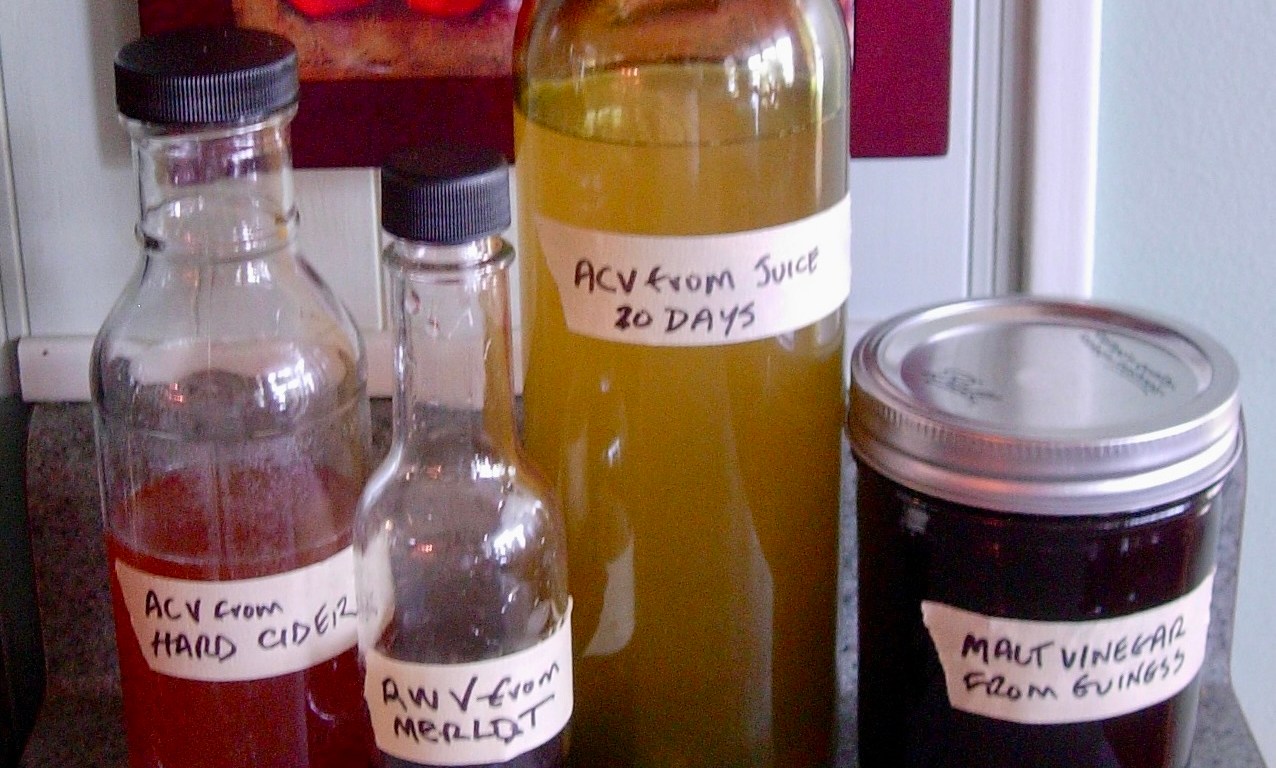
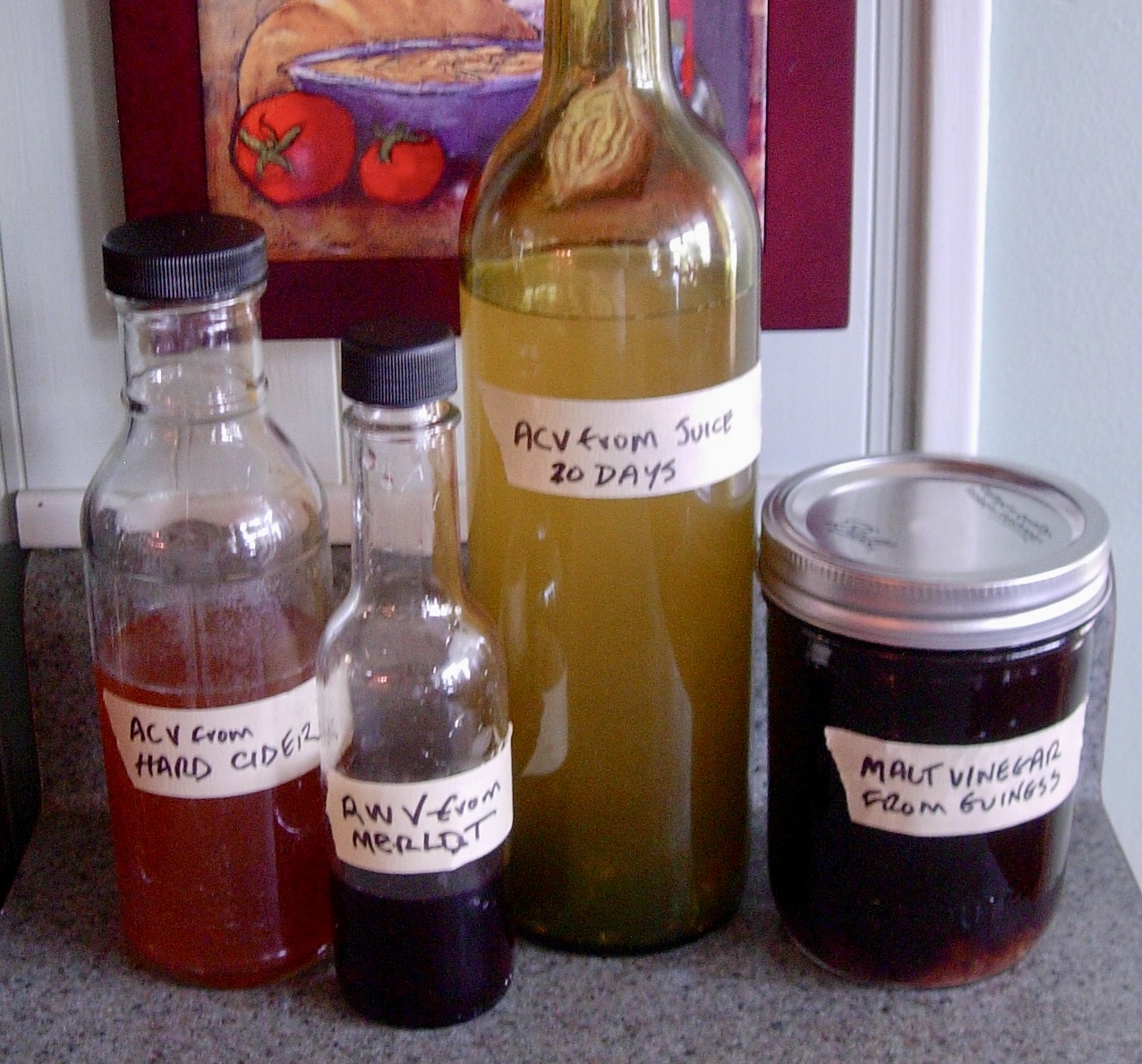
You won’t believe how delicious malt vinegar can be until you ferment some Guiness Stout vinegar.
- Use scratch vinegars to boost flavor in soups, beans, and stews
- For a simple salad dressing—toss lettuce with salt, pepper, a drizzle of vinegar, and some oil
- Raw vinegar is yet another arrow of wild probiotics in your quiver of intentional eating
To Speed Up Fermentation
- Collect the “mother” from raw vinegars. The mother can be seen as a mass at the bottom of a “raw” bottle of vinegar. You can spot it in some bottles in the supermarket. Most vinegars in stores have been pasteurized and filtered to prevent cloudiness
- You might add a straw to the jar and occasionally puff on it to increase air flow to the bottom of the jar
- Cover loosely with paper toweling to ward off insects
- Some wines have an alcohol content above 12 percent, which will impede the action. I am now diluting wines by 50 percent with filtered water
- Place in a warm place [non-air conditioned space is better]
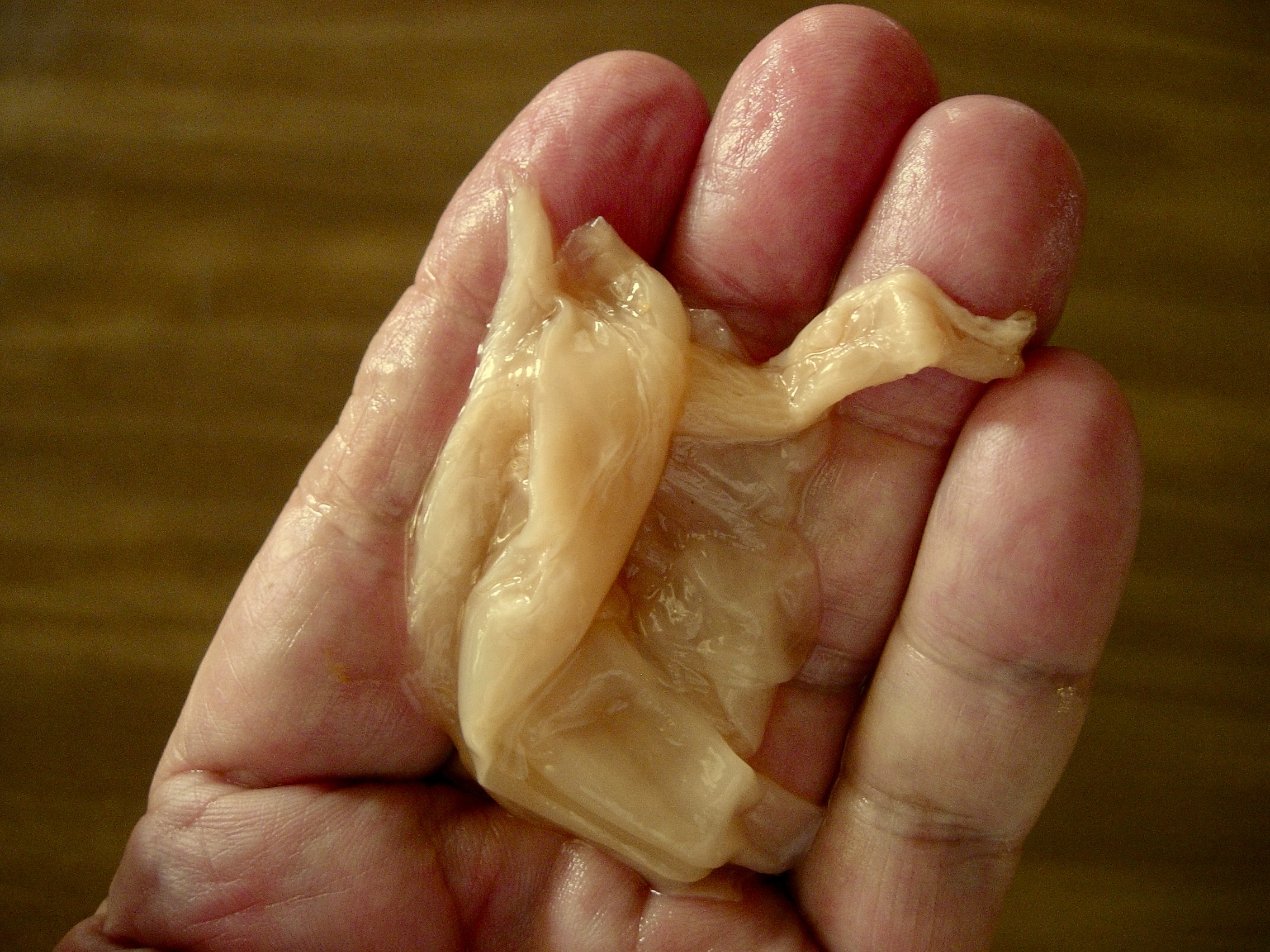
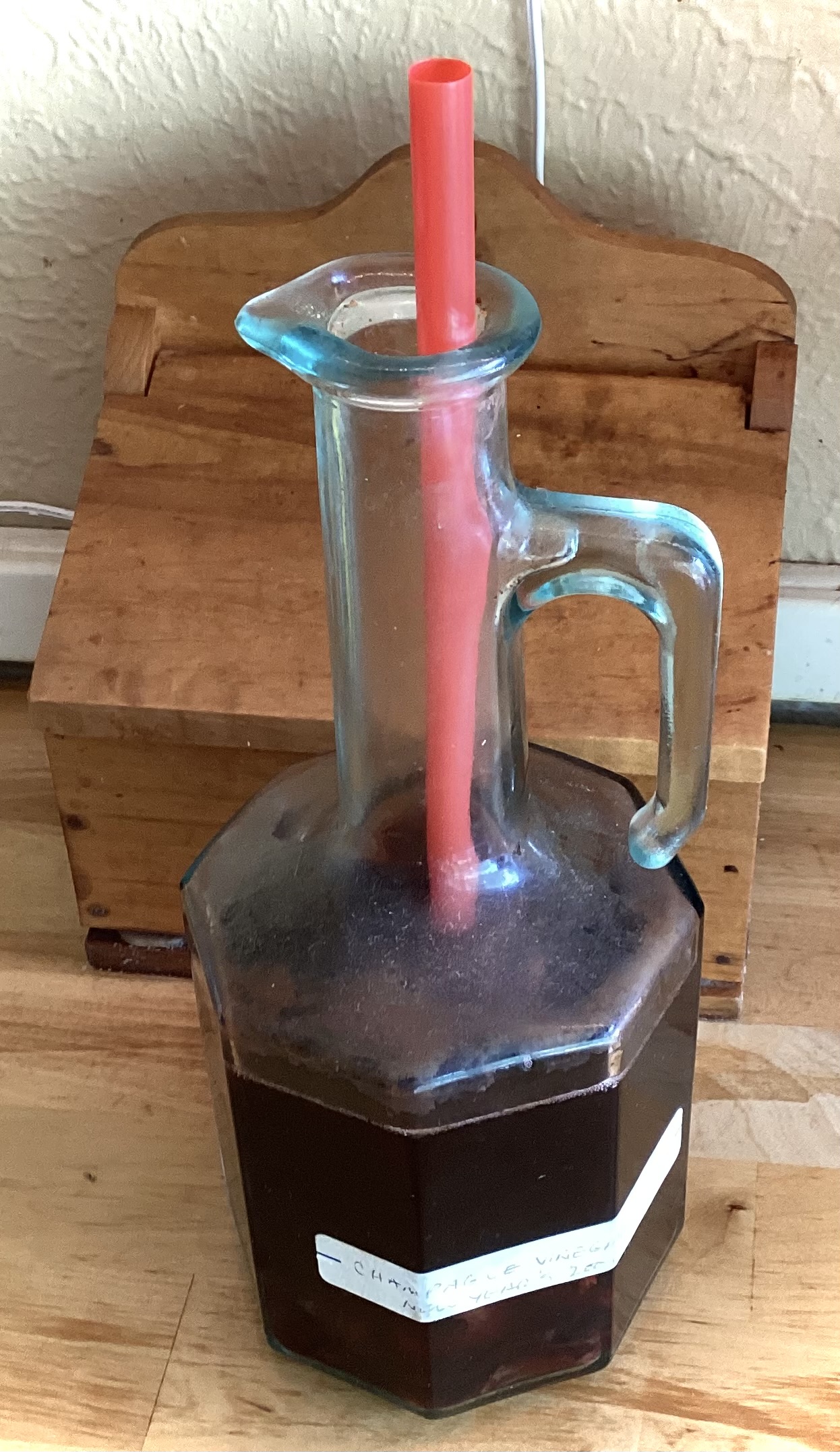
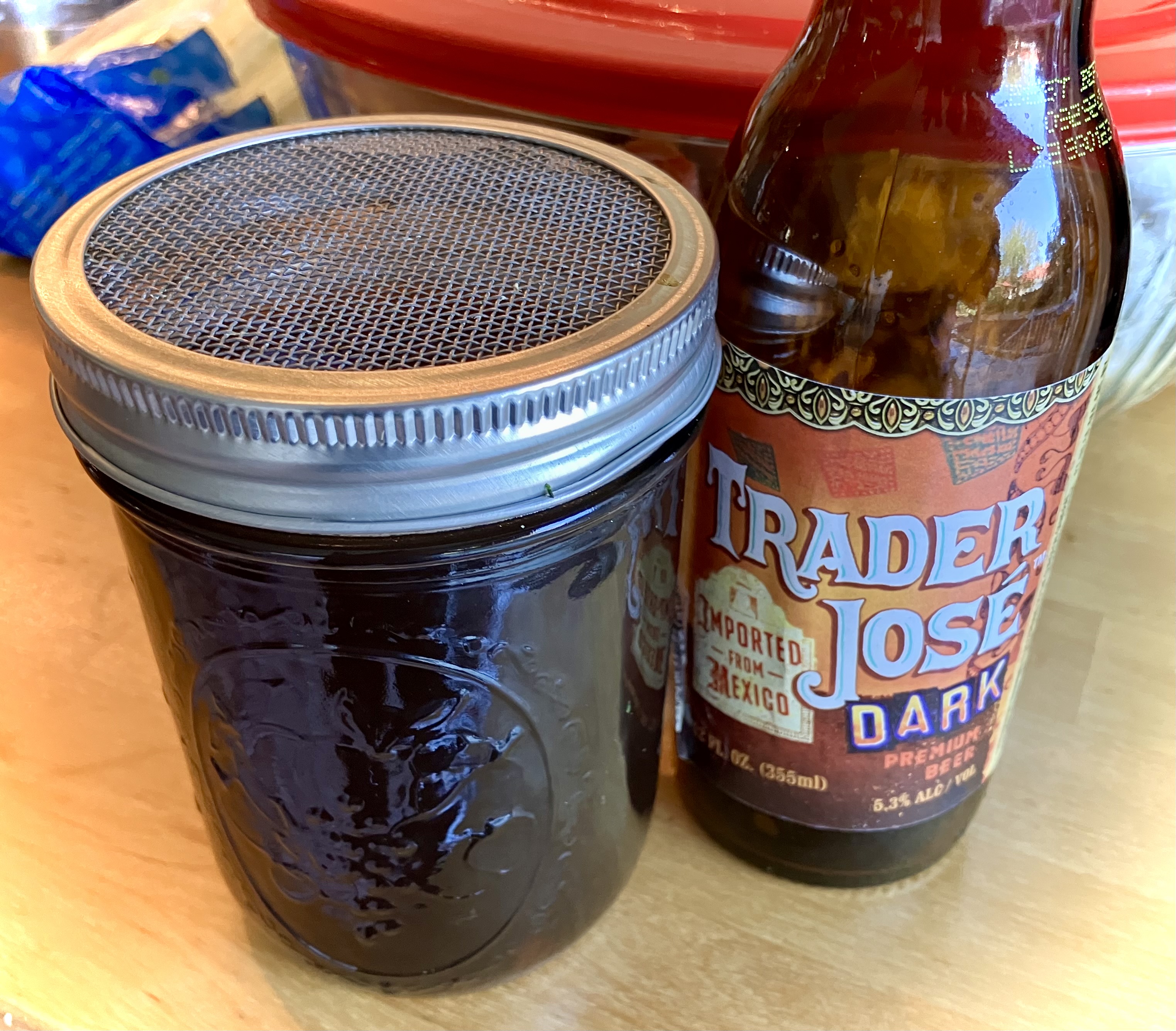
L: Mother from an Aged Vinegar M: My 24-Year-Old Mother with a Straw to Add Air R: A Screen Cover Instead of Paper Toweling or Cheese Cloth – Dark Malt Vinegar is Sublime
VINEGAR FROM WINE OR BEER
Beer makes “malt vinegar” the famed partner of British “fish and chips.” I love to ferment beers as the vinegar is milder and the flavor of the beer really shines. Dark stout malt vinegar is a whole other experience. It only takes a week or two complete.
Wine if fermented at full strength takes one or two months. After researching the time difference, I found the answer—wine has an alcohol level of 11-16%, [fortified wines are 20%], which slows down the conversion. Beer, with an alcohol level at near 4% allows the bacteria to convert much quicker.
You may dilute the wine by half with filtered water to speed up the fermentation.
Although you might consider there is no rush, and nothing more to do, but smell and sample.
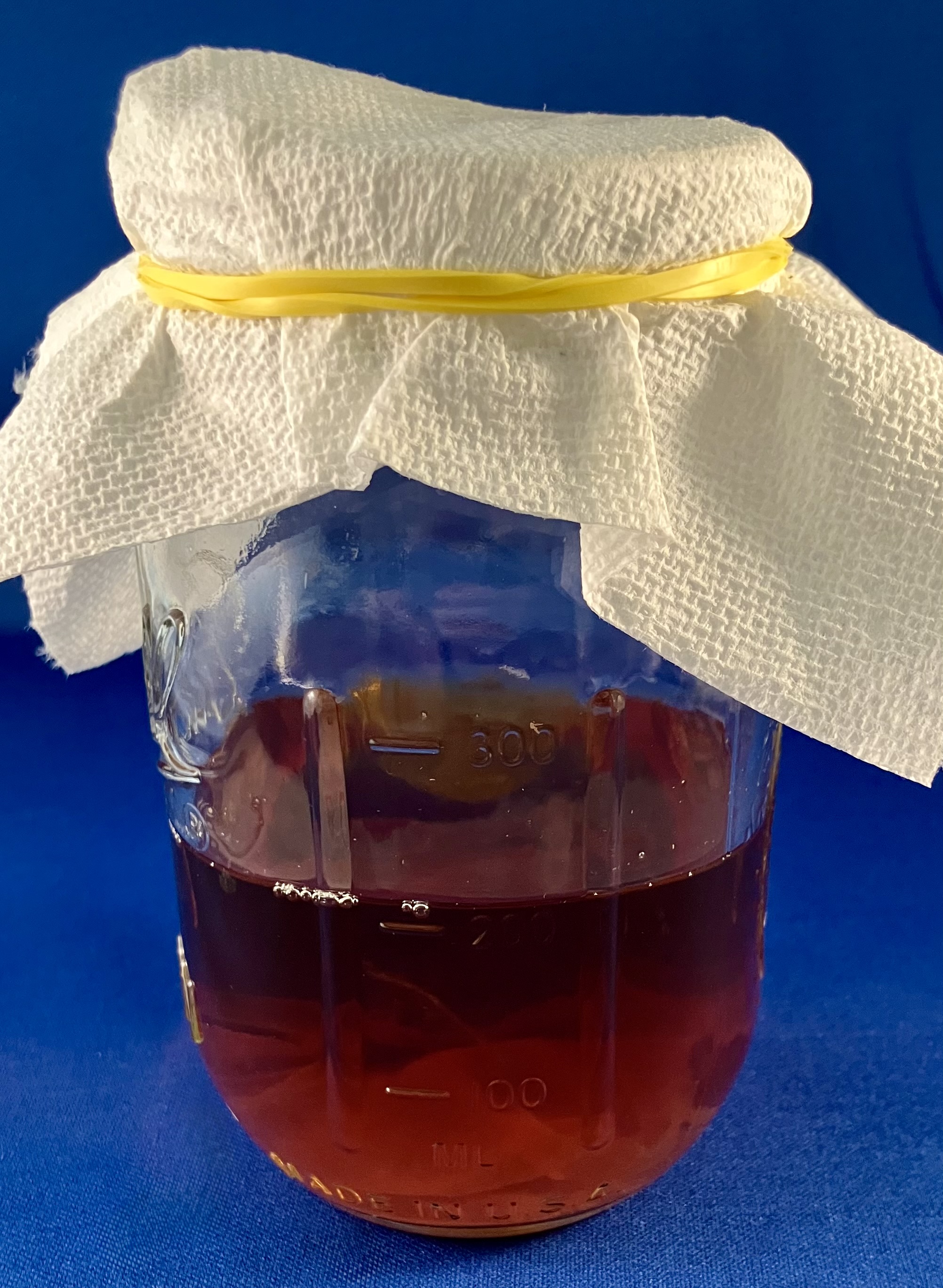
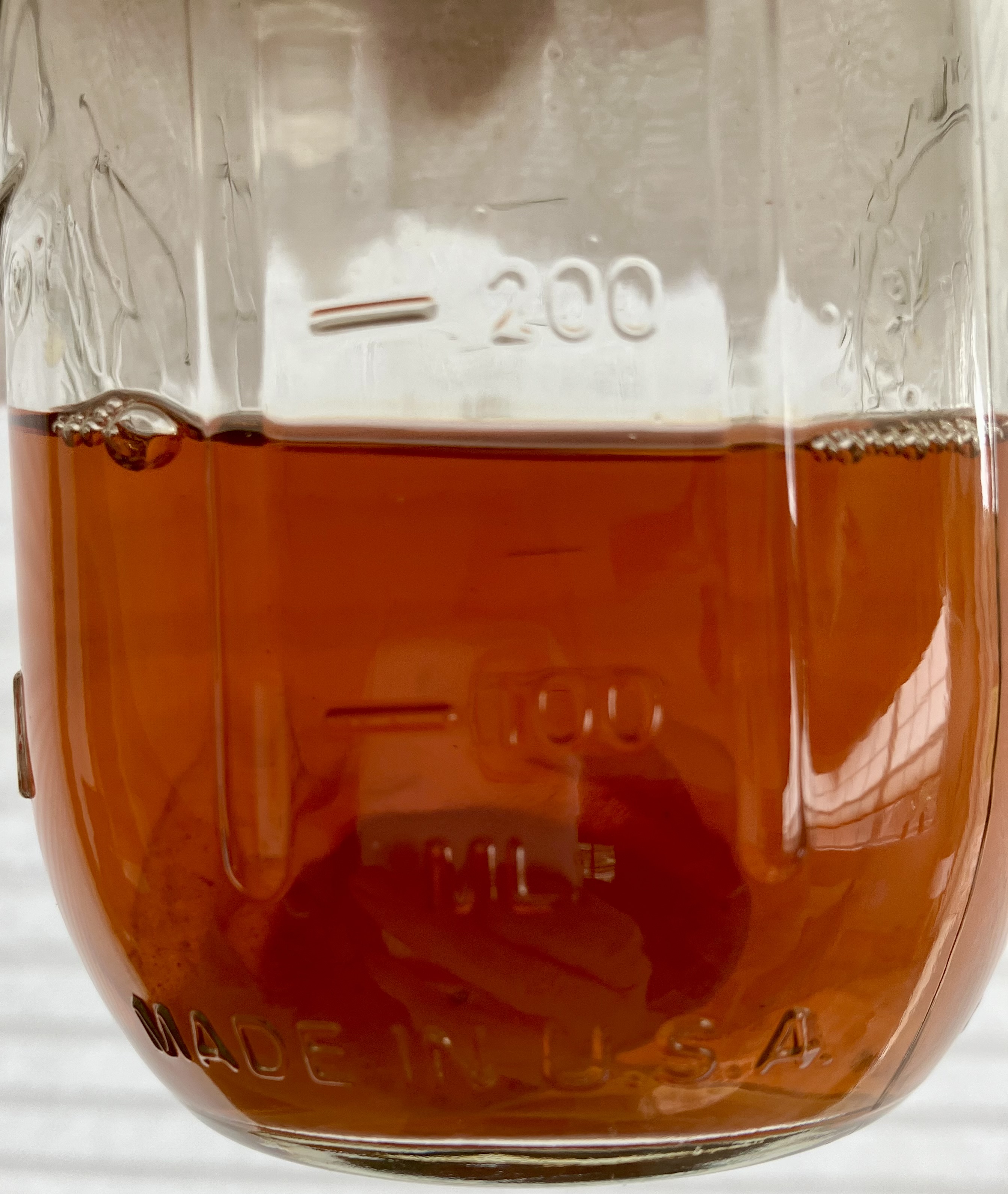
Half Can of Beer with a Dose of Mother Produced a Mother in Only 48 Hours This Time!
When the vinegar is sour enough to your taste, you can now refrigerate or store at room temperature if in a conditioned space. [You may get harmless mold at the surface that can be skimmed off]. The mother may still continue to form, so you will have cloudy, or slippery discs at the bottom.
PINEAPPLE SKIN VINEGAR
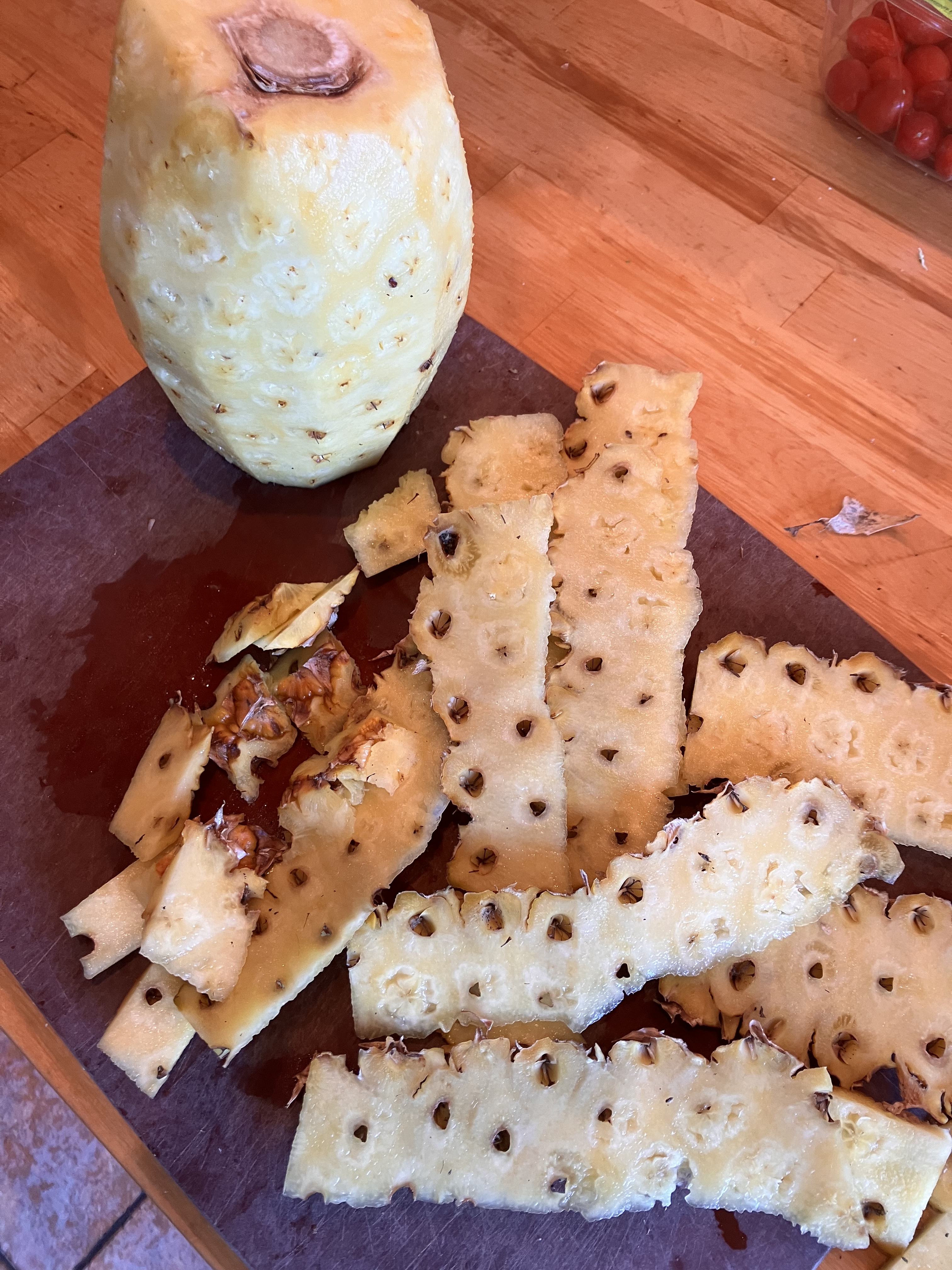
Enjoy wild fermented vinegar from pineapple skins. Very easy: place the trimmed pieces of a pineapple in a large container [2 quarts or more]. Add 1/4 cup of sugar and 8 cups of filtered water. Cover the top loosely with a towel. Stir the contents once or twice a day [to prevent mold from forming].
For about a month you will smell a bit of alcohol forming [that’s the wild, airborne yeast in action]. Eventually you will begin to smell a sour, pineapple odor [that’s the wild, airborne aceto-bacteria in action].
Note: you will have a light colored yeasty mold form on the surface—not to worry. When samples have that sour vinegar taste, you are ready to bottle. Use a colander lined with toweling over a large bowl and pour the bulk liquid into the colander and let the yeasty-mold filter through the toweling. You’re done! All in about a month.
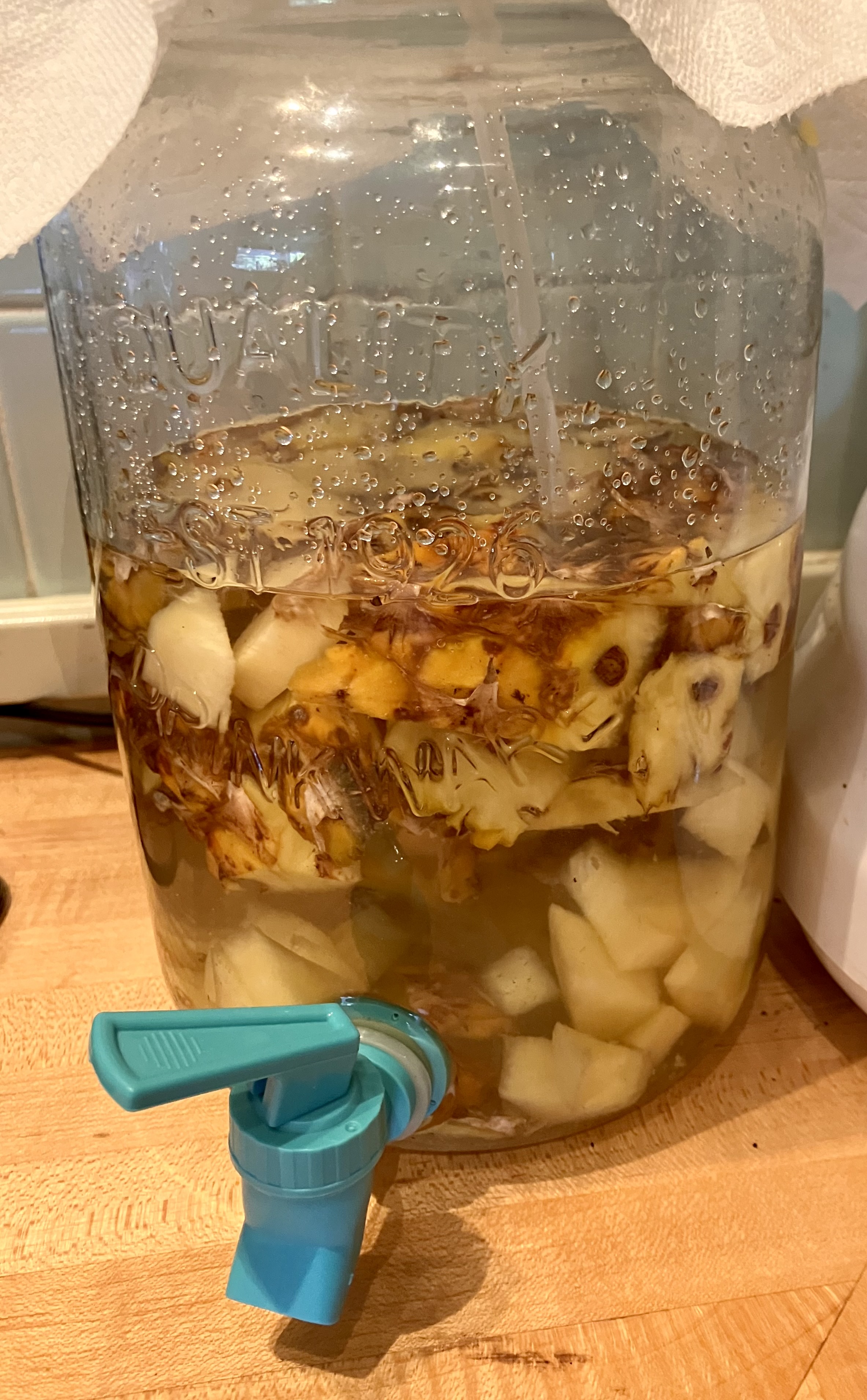
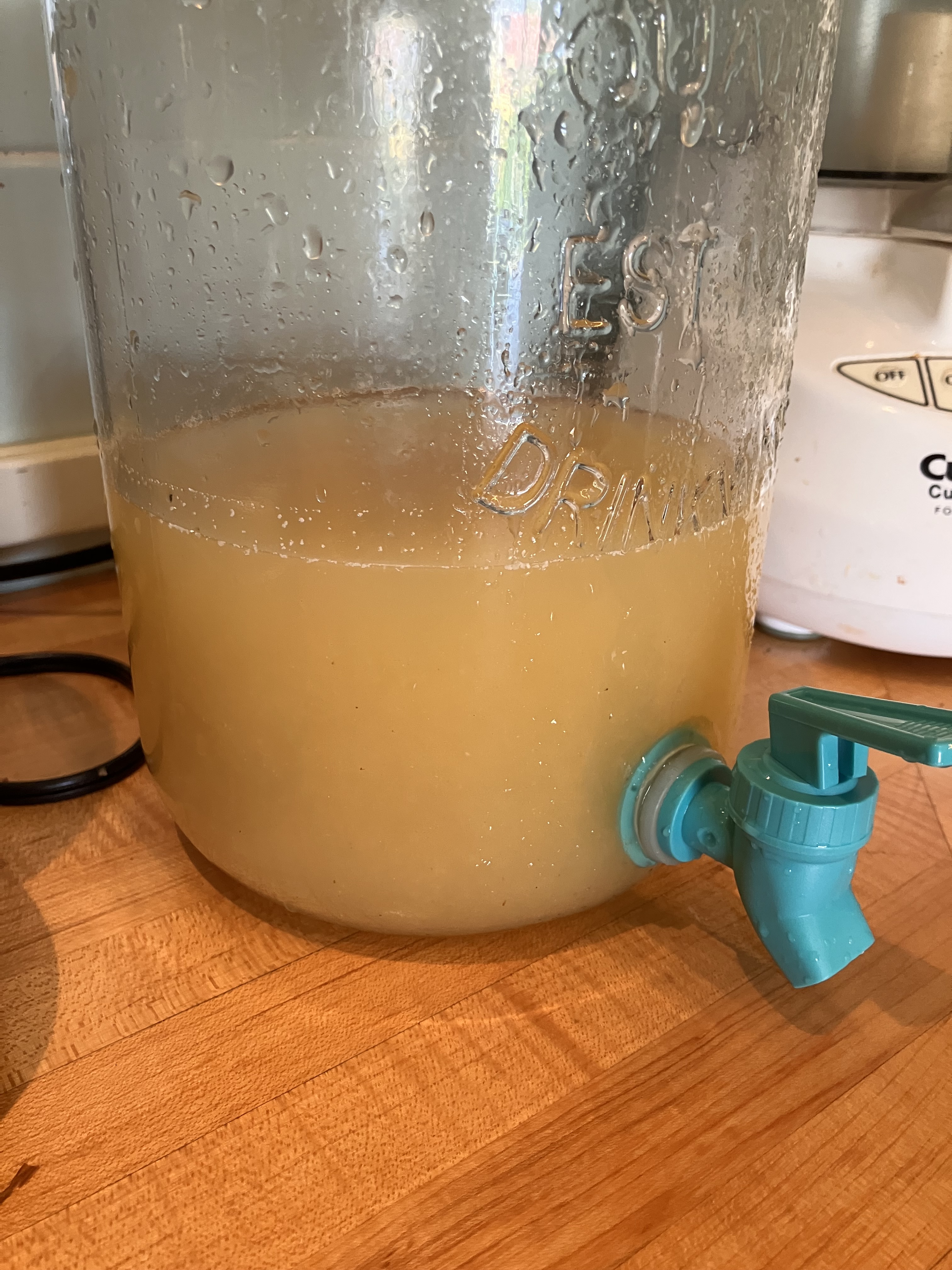
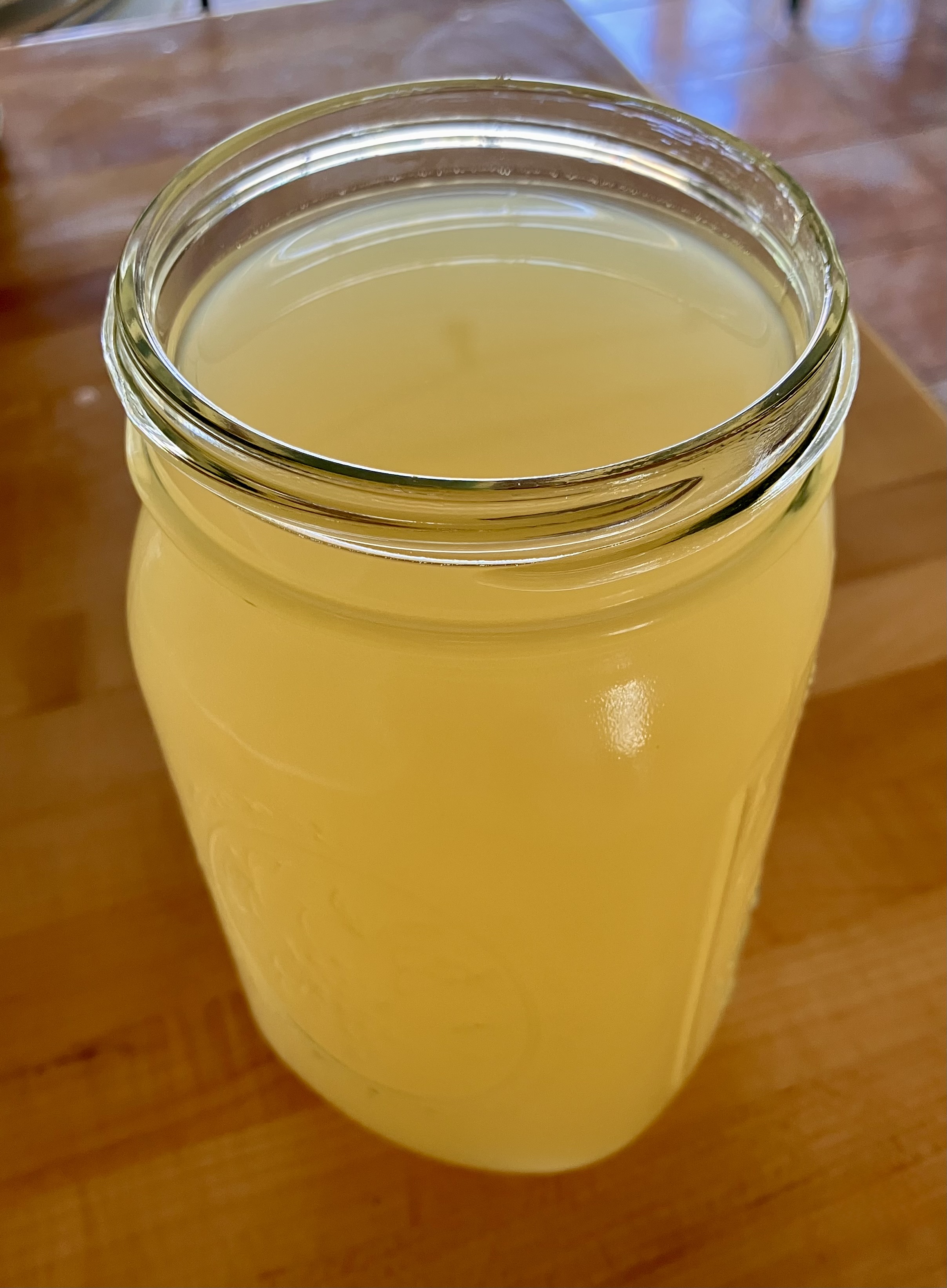
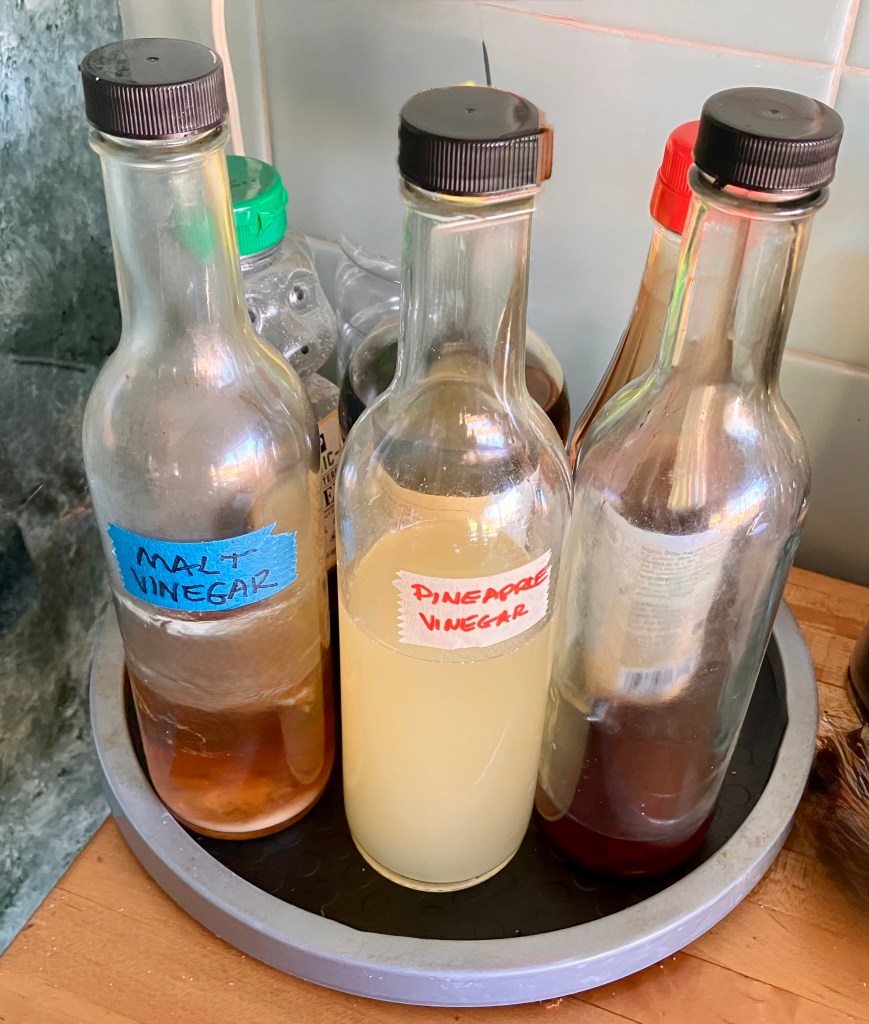
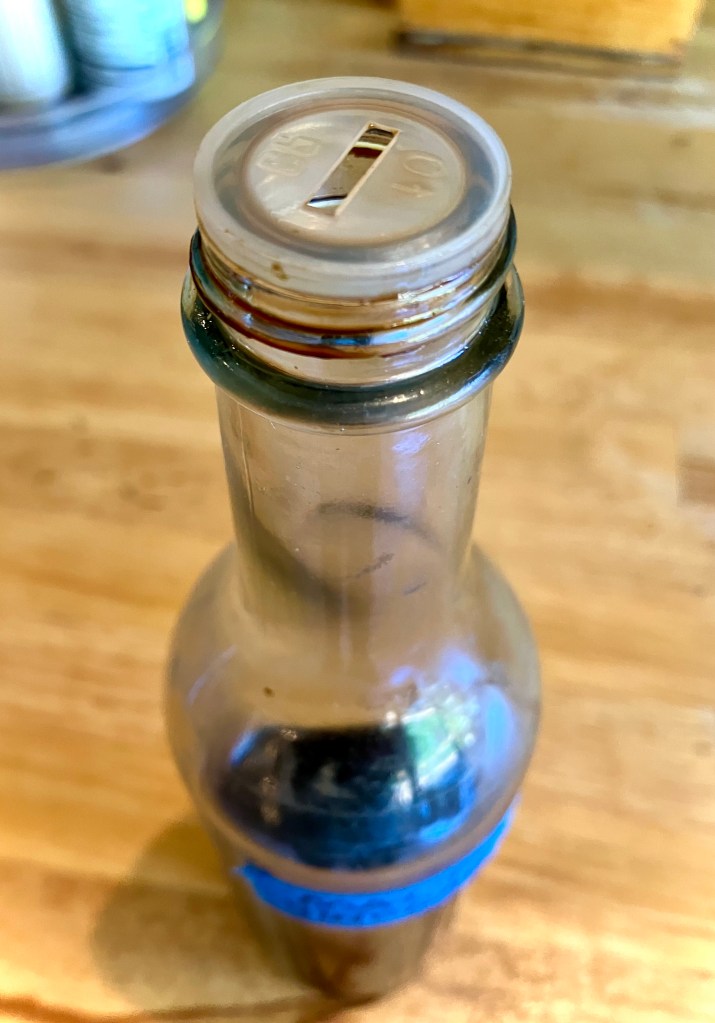
I like to collect vinegar bottles [Below] especially those that have a slotted cap to pour out dribbles onto my salad or cooked greens.
In days past, some families would have a large, covered crock with a petcock to house continuous vinegar making. They would occasionally add produce trimmings to the crock as vinegar continuously forms. They drew off some from the petcock.
When the container of beer or wine is fully converted; the mother will eventually settle out and gather to become dormant. This mother can then be used for new vinegar fermentations.
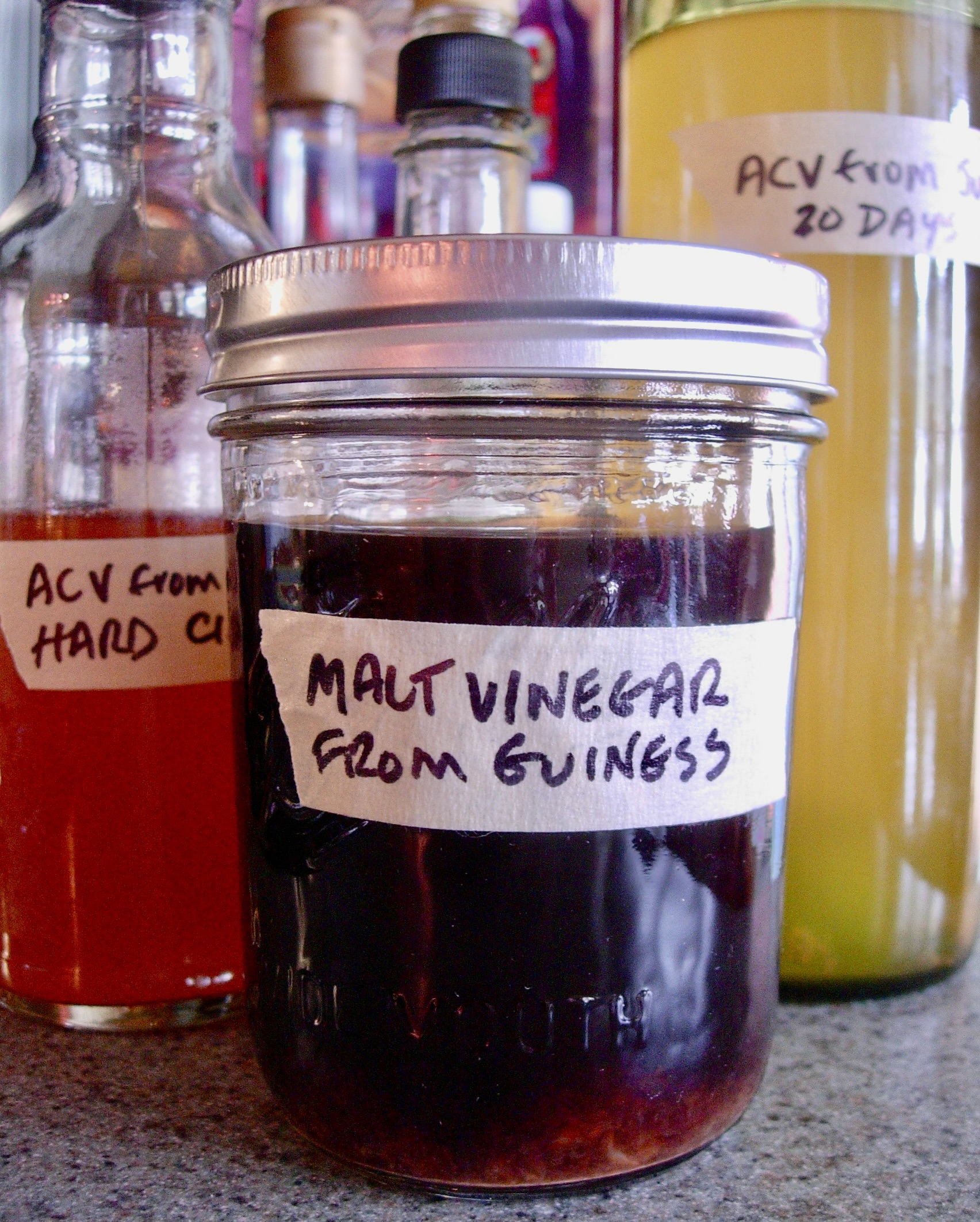
Guiness Stout Malt Vinegar—One of My Favorites
Enjoy Fresh Vinegar:
Click Here for Some Classic Salad Dressings
One time I brewed some hard cider [photo above, left bottle] using fresh apple cider and yeast. Then I added a raw apple cider vinegar mother and converted it to one very tasty vinegar!
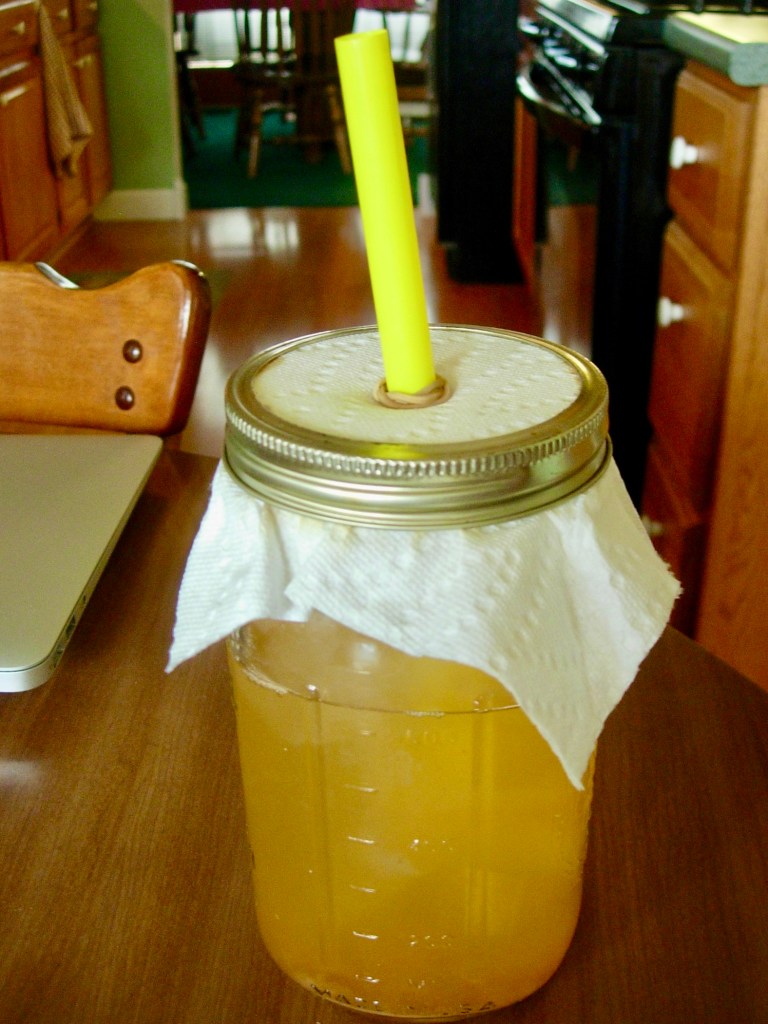
Ever the science nerd, I fashioned a vinegar making kit using a straw, paper toweling and a rubber band secured by the metal band lid. To hasten the ferment, puff gently to aerate the contents when you happen by on occasion. Yes, you and your billion buddies!
© 2024 Bill Hettig
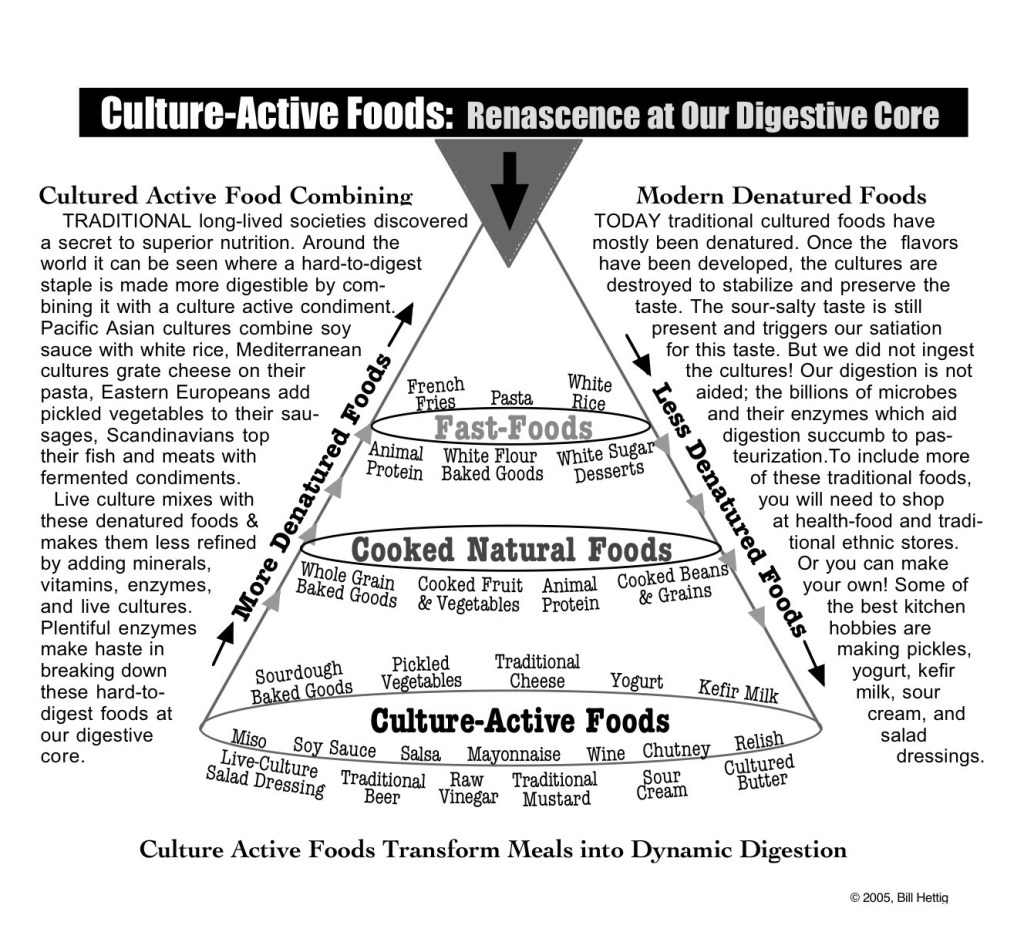
THE BIG PICTURE
Here is my depiction of how wild ferments can help balance out the ultra-processed foods.
 COOK SHARE